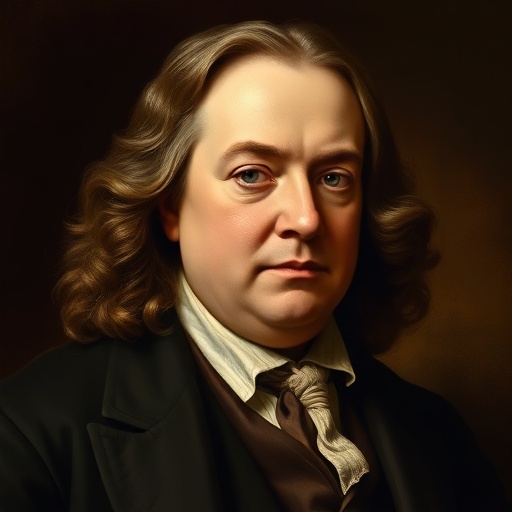
Jonathan Swift — "It is an old maxim, that a man is never happy till he dies."
It is an old maxim, that a man is never happy till he dies.
It is an old maxim, that a man is never happy till he dies.
Click any product to generate a realistic preview. Up to 3 at a time.
* Initial load can take up to 90 seconds — revising the preview in another color is nearly instant.
"I could name a country which would be glad to eat up our whole nation without salt."
"A man should never be ashamed to own he has been in the wrong, which is but saying in other words, that he is wiser today than he was yesterday."
"For first, as I have already observed, it would greatly lessen the number of papists, with whom we are yearly overrun, being the principal breeders of the nation as well as our dangerous enemies..."
"Party is the madness of many for the gain of a few."
"The world is a country which nobody ever yet knew by description; one must travel through it one's self to be acquainted with it."
Anglo-Irish satirist and Dean of Dublin's St Patrick's Cathedral whose Gulliver's Travels (1726) and A Modest Proposal (1729) are the canonical English-language satires. Closely associated with Alexander Pope (Scriblerus Club poet and collaborator) and John Gay (Beggar's Opera author and satirical contemporary). For an intellectual contrast, see Daniel Defoe, English Whig journalist and Robinson Crusoe author (1660-1731) — Defoe's Crusoe (1719) celebrates Enlightenment self-reliance and the colonial-mercantile project; Swift's Gulliver (1726) systematically dismantles every form of human pretension Defoe celebrated. The cleanest Augustan Whig-vs-Tory literary pairing — optimistic-empirical vs misanthropic-satirical.
Found in 1 providers: grok
1 source checked
Your cart is empty