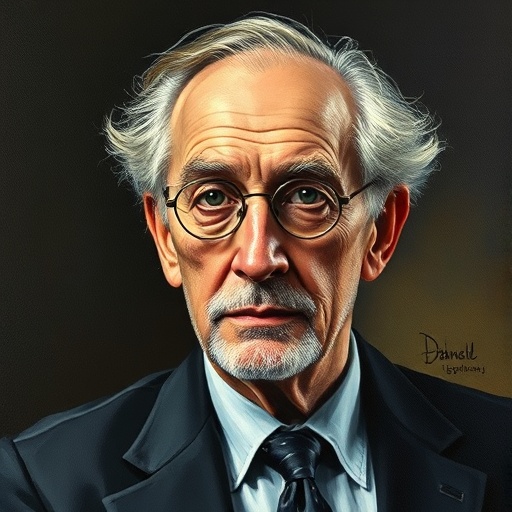
Francis Crick — "It is essential to be a bit arrogant to do good science."
It is essential to be a bit arrogant to do good science.
It is essential to be a bit arrogant to do good science.
Click any product to generate a realistic preview. Up to 3 at a time.
* Initial load can take up to 90 seconds — revising the preview in another color is nearly instant.
"A man who is not a socialist at twenty has no heart; a man who is still a socialist at forty has no head."
"It is not the strongest of the species that survives, nor the most intelligent that survives. It is the one that is most adaptable to change."
"It is not so much what one does, as what one is, that matters."
"The brain is a machine assembled not to understand itself, but to survive."
"Religion is a delusion."
Found in 1 providers: grok
1 source checked
Doing original science requires confidence bordering on arrogance. You must believe your ideas are worth pursuing even when established experts dismiss them, that you can crack problems others have failed at, and that your interpretation of murky data is correct. Without this self-assurance, a researcher defers to authority, hedges every claim, and never risks the bold conjectures that produce breakthroughs. A measured ego is a working tool, not a personality flaw.
Crick personified this. He was a 35-year-old PhD student with no major publications when he and Watson dared to model DNA's structure ahead of senior figures like Linus Pauling and Rosalind Franklin. Colleagues found him brash, loud, and relentlessly opinionated, yet that confidence drove him to later tackle the genetic code, neuroscience, and consciousness. He repeatedly entered fields where he was an outsider, convinced his reasoning could outpace specialists.
Crick worked during the postwar molecular biology revolution (1950s–60s), when physicists and chemists invaded biology armed with X-ray crystallography, radioisotopes, and information theory. Cambridge's Cavendish and the MRC unit fostered combative seminar culture where ideas were attacked openly. The race to decode DNA, then the genetic code, rewarded researchers willing to leap past incomplete data. Deference to senior biologists would have lost the structure to Pauling; boldness won the 1962 Nobel.
AI-generated insights based on extensive research and information for context. Factual errors? Email [email protected].
Your cart is empty