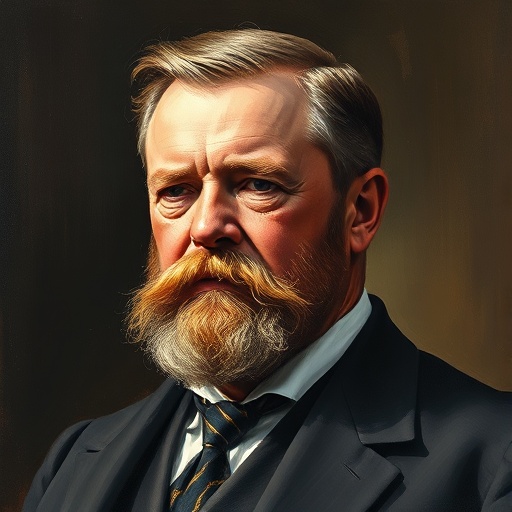
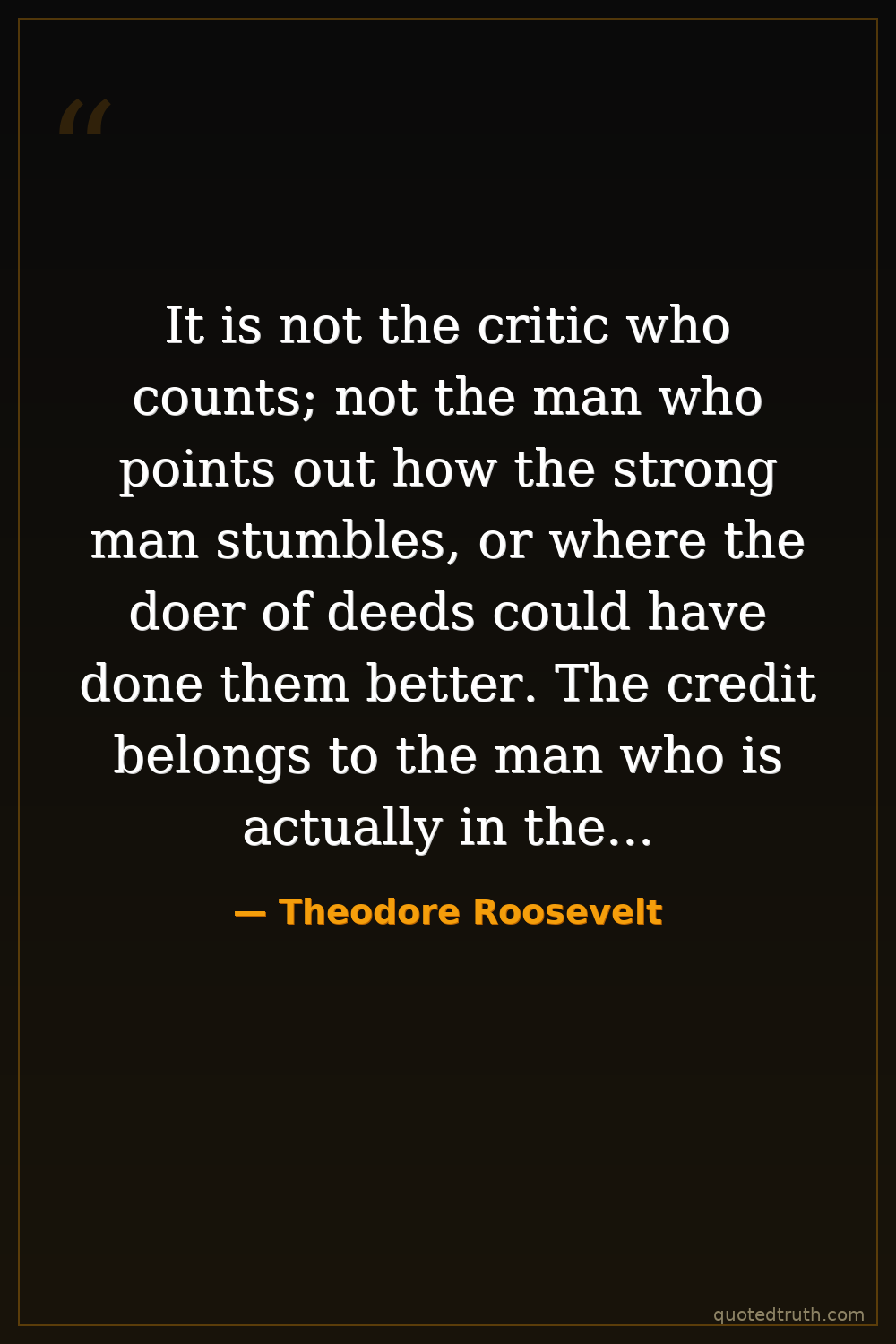
Theodore Roosevelt — "It is not the critic who counts; not the man who points out how the strong man s…"
It is not the critic who counts; not the man who points out how the strong man stumbles, or where the doer of deeds could have done them better. The credit belongs to the man who is actually in the arena, whose face is marred by dust and sweat and blood; who strives valiantly; who errs, who comes short again and again, because there is no effort without error and shortcoming; but who does actually strive to do the deeds; who knows great enthusiasms, the great devotions; who spends himself in a worthy cause; who at the best knows in the end the triumph of high achievement, and who at the worst, if he fails, at least fails while daring greatly, so that his place shall never be with those cold and timid souls who neither know victory nor defeat.
Click any product to generate a realistic preview. Up to 3 at a time. * Initial load can take up to 90 seconds — revising the preview in another color is nearly instant.
26th US President (1901-1909), Progressive trust-buster, conservation pioneer, and the youngest person to assume the presidency (after McKinley's assassination).
Closely associated with
William Howard Taft (his hand-picked successor and later 1912 election rival) and Gifford Pinchot (his Forest Service chief and conservation co-architect).
For an intellectual contrast, see
J.P. Morgan, financier and architect of Northern Securities (1837-1913) — TR's 1902 antitrust suit against Morgan's Northern Securities railroad combination was the founding act of progressive antitrust enforcement. Their famous 1902 White House meeting — where Morgan reportedly said 'send your man to my man' and TR refused — is the canonical moment of presidential authority asserting over private financial power.
Details
Speech, 'Citizenship in a Republic' at the Sorbonne, Paris