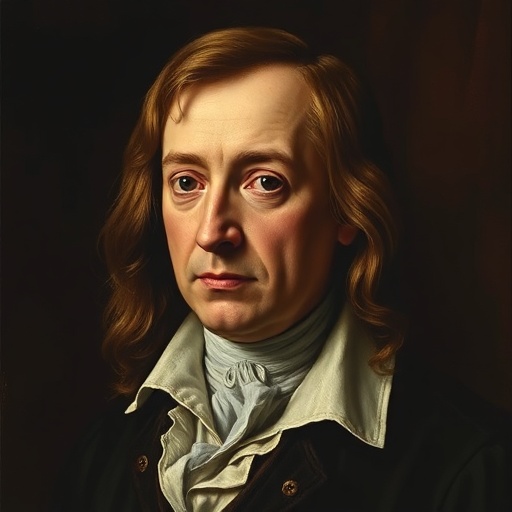
John Milton — "It is ordained in the eternal constitution of things, that men of intemperate mi…"
It is ordained in the eternal constitution of things, that men of intemperate minds cannot be free. Their passions forge their fetters.
It is ordained in the eternal constitution of things, that men of intemperate minds cannot be free. Their passions forge their fetters.
Click any product to generate a realistic preview. Up to 3 at a time.
* Initial load can take up to 90 seconds — revising the preview in another color is nearly instant.
"You can make hell out of heaven and heaven out of hell. It's all in the mind."
"The end of all learning is to know God, and out of that knowledge to love him, and to imitate him, as we may the nearest by possessing our souls of true virtue."
"Lords are not to be trusted with the liberty of their own consciences, so little with the liberty of ours."
"Evil communication corrupts good manners."
"What hath night to do with sleep?"
English poet whose Paradise Lost (1667) is the canonical English epic, written while blind during the Restoration after his service to Cromwell's Commonwealth. Closely associated with Andrew Marvell (Commonwealth poet and friend who protected Milton at the Restoration). For an intellectual contrast, see King Charles II's Restoration court, the courtly, sexually-libertine, theater-reopened world of 1660s London — Milton wrote Paradise Lost as a defeated Republican; the Restoration culture around him celebrated everything his Commonwealth had banned. The cleanest 'losing side writes the masterpiece' moment in English literature — Paradise Lost's Satan is freighted with the political defeat of the regicides Milton served.
Your cart is empty