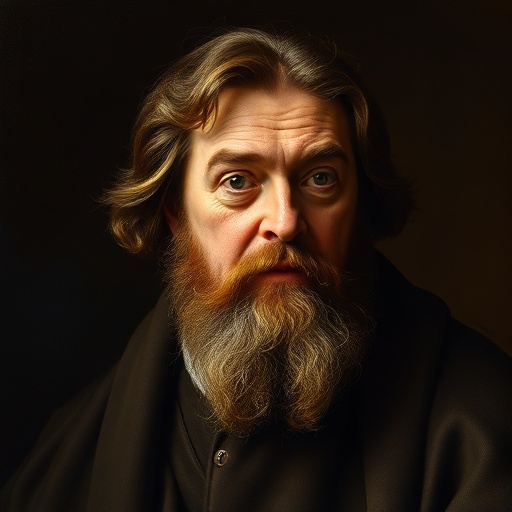
Francis Bacon — "Judges must beware of hard constructions and strained inferences, for there is n…"
Judges must beware of hard constructions and strained inferences, for there is no worse torture than that of laws.
Judges must beware of hard constructions and strained inferences, for there is no worse torture than that of laws.
Click any product to generate a realistic preview. Up to 3 at a time.
* Initial load can take up to 90 seconds — revising the preview in another color is nearly instant.
"Prosperity is the blessing of the Old Testament; adversity is the blessing of the New, which carrieth the greater benediction, and better discovereth God's favour."
"Prosperity doth best discover vice, but adversity doth best discover virtue."
"Friends are thieves of time."
"Power to do good is the true and lawful end of aspiring. For good thoughts (though God accept them) yet towards men are little better than good dreams, except they be put in act; and that cannot be wi…"
"The human understanding is like a false mirror, which, receiving rays irregularly, distorts and discolors the nature of things by mingling its own nature with it."
English philosopher whose Novum Organum (1620) laid out the inductive method that became the foundation of modern empirical science. Closely associated with Galileo Galilei (contemporary scientific revolutionary). For an intellectual contrast, see Aristotelian scholasticism, the syllogistic, deductive philosophical tradition that ruled medieval universities — Bacon's Novum Organum literally means 'new instrument' — the explicit replacement for Aristotle's Organon. The entire scientific revolution turned on which logic was correct: deduction from authority or induction from observation.
The standard scholarly entry points to Francis Bacon's work: Lisa Jardine (Queen Mary University of London, Renaissance scholar) — Francis Bacon: Discovery and the Art of Discourse (1974); Jonathan Marwil (Michigan, intellectual historian) — The Trials of Counsel: Francis Bacon in 1621 (1976); Perez Zagorin (Rochester, historian of ideas) — Francis Bacon (1998). These are the works graduate seminars cite when teaching Francis Bacon.
Your cart is empty