Pope Urban II — "Let those who have been hired as mercenaries for trivial pay, now earn an eterna…"
Let those who have been hired as mercenaries for trivial pay, now earn an eternal reward.
Let those who have been hired as mercenaries for trivial pay, now earn an eternal reward.
Click any product to generate a realistic preview. Up to 3 at a time.
* Initial load can take up to 90 seconds — revising the preview in another color is nearly instant.
"Oh, what a disgrace if such a despised and base race, which worships demons, should conquer a people which has the faith of omnipotent God and has been made glorious with the name of Christ!"
"We command all of you to prepare yourselves for the journey."
"They violate the women of the Christians."
"Let no delay postpone the journey, but let all, having leased their lands and collected money, when winter has ended and spring has begun, zealously set out on the road with God as their guide."
"Go, therefore, with confidence to the battle of the Lord, knowing that He is with you."
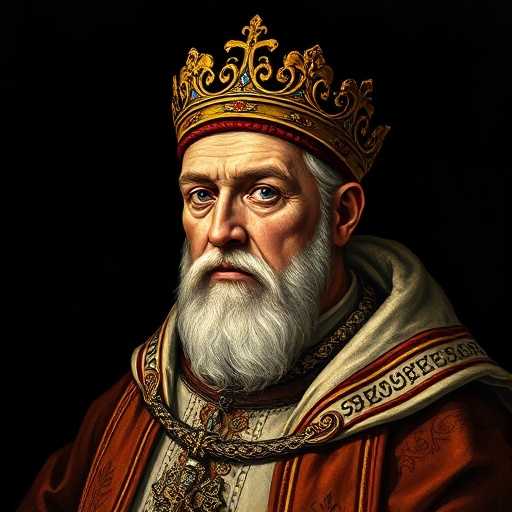
Pope (1088-1099) whose Council of Clermont speech (November 1095) launched the First Crusade — the founding event of nine centuries of Christian-Muslim military conflict. Closely associated with Pope Gregory VII (his predecessor on papal-imperial reform). For an intellectual contrast, see Saladin, Kurdish-Muslim Sultan of Egypt and Syria (1138-1193) — Saladin recaptured Jerusalem in 1187, undoing the First Crusade Urban II launched 92 years earlier. Saladin's chivalrous treatment of Christian prisoners became the canonical Muslim counter-image to Crusader brutality. The cleanest before/after pairing of the Crusades' moral arc.
Found in 1 providers: grok
1 source checked
The quote contrasts low-paid mercenary service with eternal spiritual reward. Urban is telling professional soldiers: stop risking your life for a lord's small coin and fight for God instead, earning salvation. It reframes military labor as a sacred transaction — your sword-work buys heaven. The phrase 'trivial pay' deliberately dismisses earthly wages as worthless compared to the infinite reward God promises crusaders who take up the holy cause.
Urban II, a Cluniac reformer-pope, delivered this at the Council of Clermont in 1095, launching the First Crusade. His monastic background instilled the conviction that earthly pursuits were spiritually empty. After years reforming a corrupt church, he saw rampant knightly violence as energy badly wasted. Redirecting mercenaries toward holy war served his dual agenda: purify Christendom's moral disorder and reconquer Jerusalem by solving Europe's violence problem through sacred purpose.
In 1095, Europe's knights routinely fought as mercenaries in petty feudal conflicts, ignoring Church bans on private war. The Peace of God and Truce of God movements had largely failed to curb the violence. Simultaneously, Seljuk Turks had seized Jerusalem and routed Byzantine forces. Urban needed fighters but had no treasury to pay them. By substituting eternal salvation for wages, he invented a powerful new recruitment logic that mobilized tens of thousands.
AI-generated insights based on extensive research and information for context. Factual errors? Email [email protected].
Your cart is empty