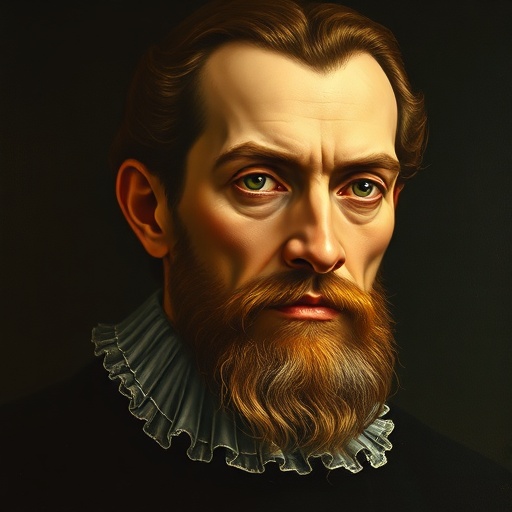
Machiavelli — "Men are more apt to forget the death of their father than the loss of their patr…"
Men are more apt to forget the death of their father than the loss of their patrimony.
Men are more apt to forget the death of their father than the loss of their patrimony.
Click any product to generate a realistic preview. Up to 3 at a time.
* Initial load can take up to 90 seconds — revising the preview in another color is nearly instant.
"A wise prince, therefore, ought to find a means by which his subjects will always in every sort and kind of circumstance have need of the state and of him, and then they will always be faithful to him…"
"For of men it may generally be affirmed that they are ungrateful, fickle, false, cowardly, covetous, and as long as you succeed they are entirely yours, offering you their blood, their property, their…"
"Men are always more easily deceived when they are trying to deceive others."
"It is not reason but necessity that makes men humble."
"It is necessary for a prince, if he wishes to maintain himself, to learn how not to be good, and to use this knowledge and not use it, according to the necessity of the case."
Florentine diplomat and political theorist whose The Prince (written 1513) became the founding text of political realism and gave us the adjective 'Machiavellian.' Closely associated with Francesco Guicciardini (fellow Florentine political analyst and historian). For an intellectual contrast, see Erasmus of Rotterdam, Dutch humanist and The Education of a Christian Prince author (1516) — Erasmus's princely-instruction manual was published three years after Machiavelli's, for the same European audience, and is the explicit Christian-virtue alternative to Machiavellian power-realism. The cleanest 'realism vs idealism' founding pairing in modern political theory.
Your cart is empty