What it means
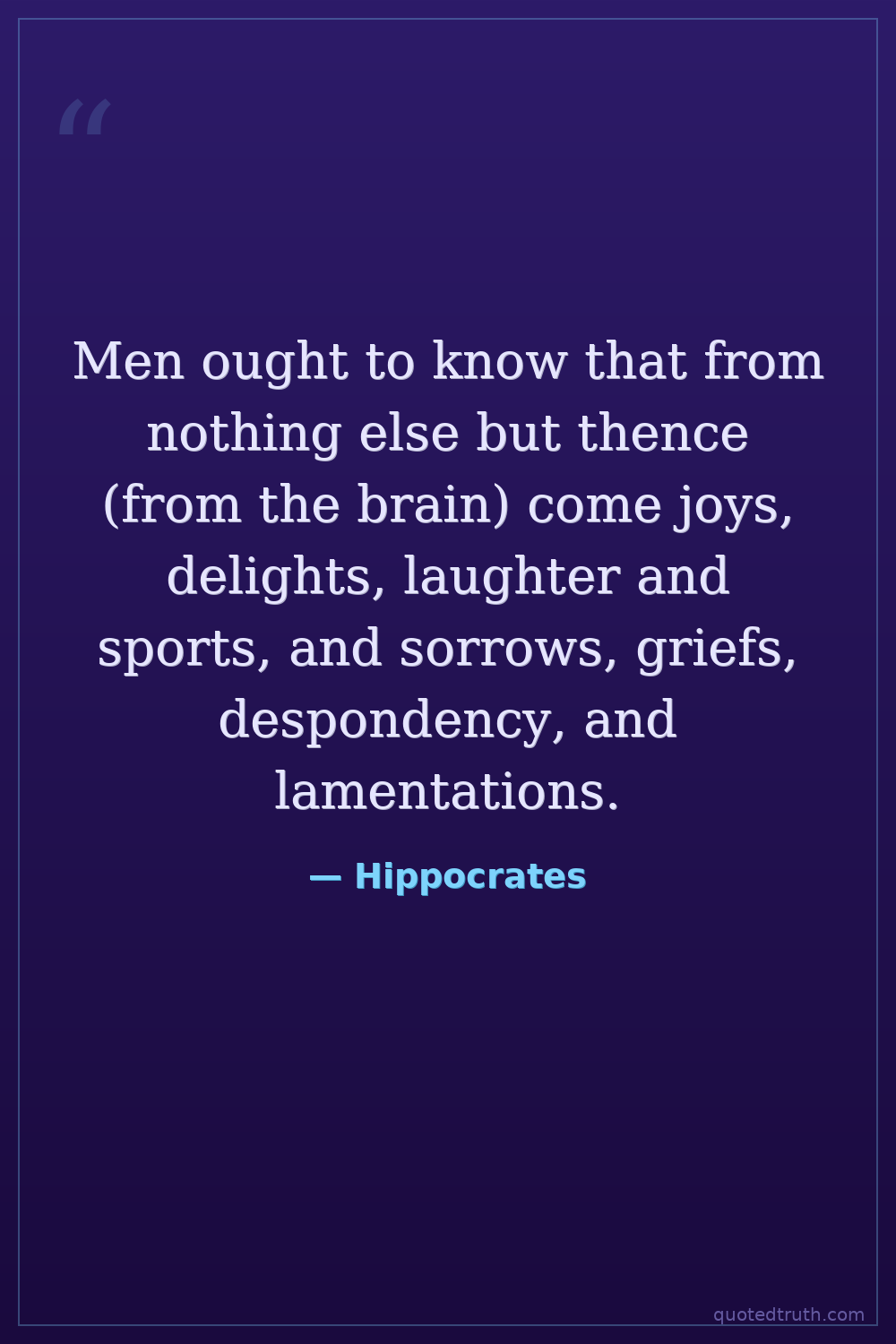
All human emotions — happiness, laughter, joy, as well as sadness, grief, and despair — originate in the brain, not the heart or other organs. Emotional experience is a physical, neurological phenomenon. This is a direct claim that the mind and feelings are products of brain activity, not spiritual forces or organs like the heart, which most people at the time assumed governed emotion.
Relevance to Hippocrates
Hippocrates systematically observed disease through physical causes rather than divine intervention, founding empirical medicine. This quote reflects his materialist approach: he studied epilepsy and mental illness as brain disorders. His treatise On the Sacred Disease argued seizures were not god-sent but brain-based — the same logic applied here to emotions, consistent with his lifelong rejection of supernatural explanations for human experience.
The era
In ancient Greece, the heart was widely believed to be the seat of emotion and thought — a view shared by Aristotle and embedded in popular culture. Religious healers attributed mental illness to gods or demons. Hippocrates, practicing around 400 BCE, challenged this by locating all consciousness in the brain, a radical materialist claim that prefigured modern neuroscience by over two thousand years and directly contested priestly medical authority.
AI-generated insights based on extensive research and information for context. Factual errors? Email [email protected].