What it means
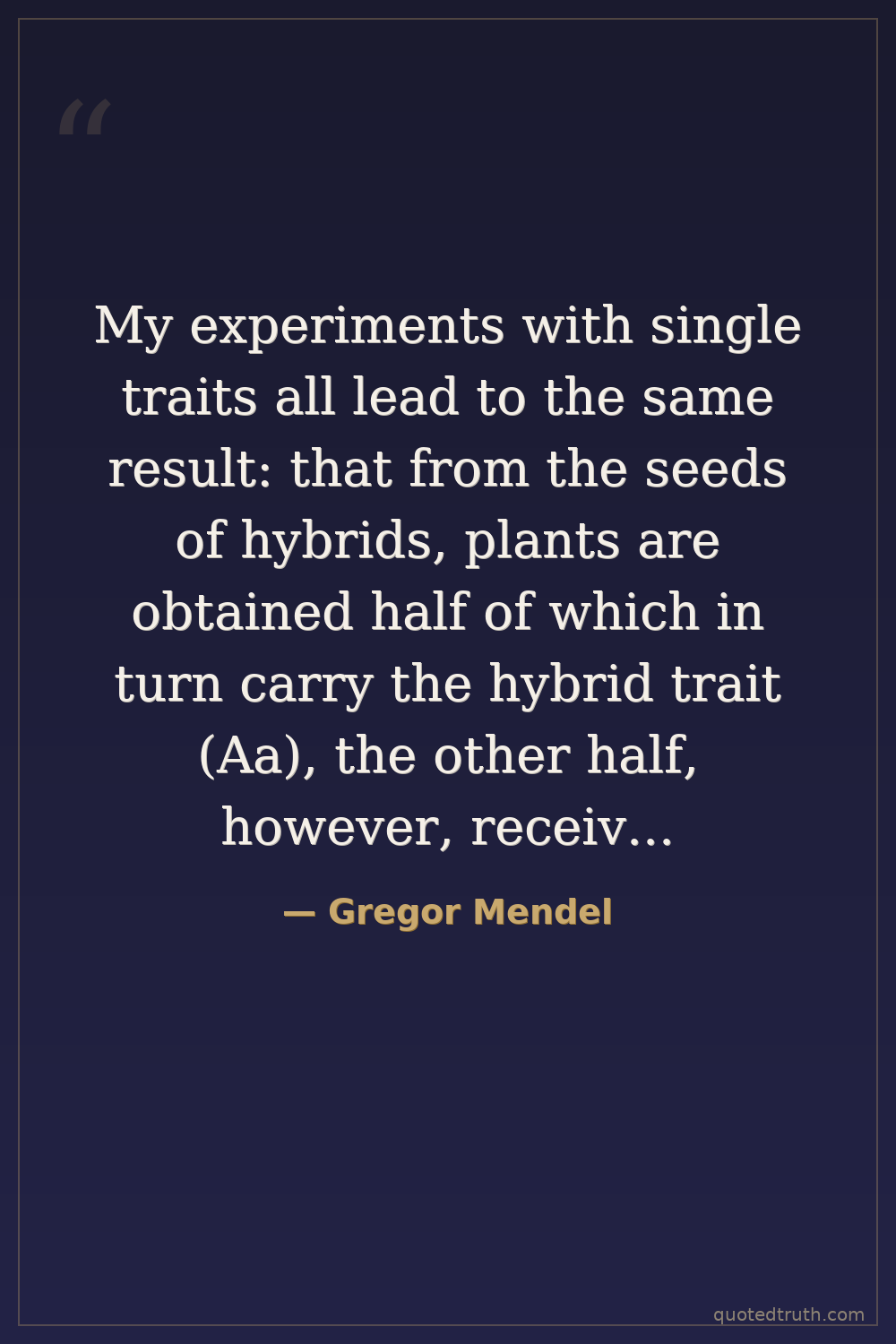
When hybrid plants breed together, their offspring split into a predictable mathematical ratio: one-quarter inherit the pure dominant trait, one-half remain hybrid, and one-quarter inherit the pure recessive trait. This 1:2:1 ratio — what Mendel called a 'simple series' — reveals that inheritance follows fixed numerical rules, not random blending. It was the first empirical proof that biological traits transmit as discrete, countable units across generations.
Relevance to Gregor Mendel
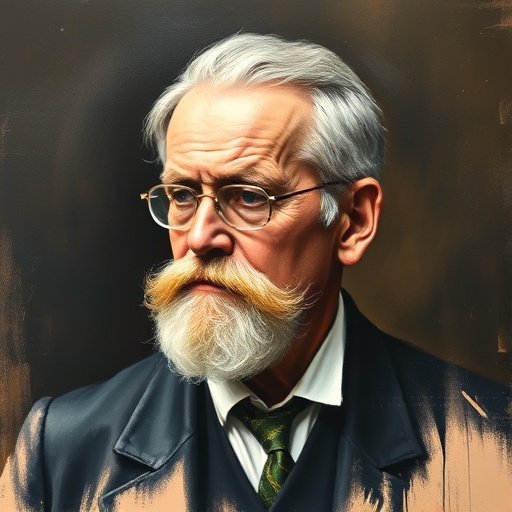
Mendel spent eight years cultivating over 29,000 pea plants in his Brno monastery garden, hand-pollinating each and recording results with a statistician's rigor. Trained in mathematics and physics at Vienna, he was uniquely equipped to recognize ratios where contemporaries saw chaos. A methodical friar working in near-total obscurity, he trusted his counts absolutely — this ratio-based reasoning was his signature method for uncovering nature's hidden mathematical order.
The era
Published in 1866, Mendel's findings arrived seven years after Darwin's On the Origin of Species overturned biology. Darwin urgently needed a heredity mechanism — the prevailing blending-inheritance theory mathematically diluted favorable traits toward extinction within generations. Mendel's discrete-unit model solved this, yet science ignored it for 35 years. Rediscovered in 1900, it triggered the Modern Synthesis, merging Darwinian evolution with Mendelian genetics into the unified framework biology still relies on today.
AI-generated insights based on extensive research and information for context. Factual errors? Email [email protected].