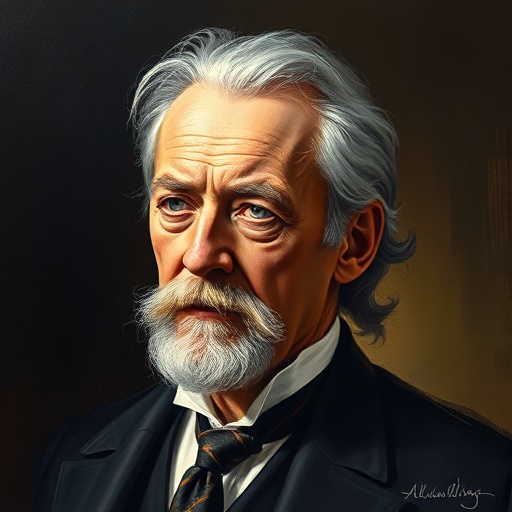
Alexander Fleming — "My laboratory was always a bit chaotic, but I knew where everything was."
My laboratory was always a bit chaotic, but I knew where everything was.
My laboratory was always a bit chaotic, but I knew where everything was.
Click any product to generate a realistic preview. Up to 3 at a time.
* Initial load can take up to 90 seconds — revising the preview in another color is nearly instant.
"I can only warn. It is up to others to heed the warning."
"I had no idea at the time that I was making a discovery that would change the course of medicine."
"The laboratory worker who is not prepared to meet with occasional failures will never achieve success."
"The mold was a lucky accident, but the observation was not."
"My own work was really quite simple. I just observed what was happening."
Found in 1 providers: grok
1 source checked
A workspace that looks disorganized to outsiders can still be fully functional — even efficient — for the person who created it. The quote draws a line between external appearance and internal mental order. True chaos means not knowing where things are; that is not what is described here. Many creative and scientific minds thrive in environments others would call messy, working from an intuitive, personal system invisible to everyone else.
Fleming's most famous discovery — penicillin in 1928 — happened precisely because his St. Mary's Hospital laboratory was not obsessively controlled. A mold-contaminated Petri dish, left among others before a holiday, revealed bacteria being killed around it. A rigidly ordered lab might have discarded it as contamination. Fleming's brilliance lay in recognizing significance within apparent accident, which required knowing his environment well enough to notice exactly what was anomalous.
Fleming worked primarily between the 1910s and 1950s, when medical research labs were largely individual-scientist operations — personal workshops rather than today's standardized, regulation-heavy environments. The 1920s through 1940s saw the first antibiotic revolution, partly fueled by wartime urgency. Scientific culture still celebrated the lone-genius model: eccentric researchers making breakthroughs in cluttered rooms. Institutional oversight and formal protocols tightened sharply after World War II, making Fleming's relaxed approach increasingly rare.
AI-generated insights based on extensive research and information for context. Factual errors? Email [email protected].
Your cart is empty