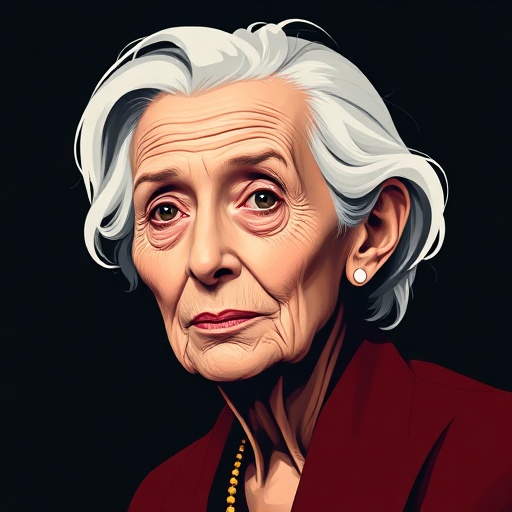
Jane Goodall — "My life has been an adventure, and I wouldn't have it any other way."
My life has been an adventure, and I wouldn't have it any other way.
My life has been an adventure, and I wouldn't have it any other way.
Click any product to generate a realistic preview. Up to 3 at a time.
* Initial load can take up to 90 seconds — revising the preview in another color is nearly instant.
"Until we learn to respect and live in harmony with the natural world, we will never truly be at peace."
"The future of the planet depends on us."
"I think the biggest problem we face is this disconnect between our clever brains and our loving hearts."
"Chimpanzees have taught me that the difference between us and them is not as big as we once thought."
"I think the most important thing is to keep active and to hope that your mind stays active."
British primatologist who in 1960 began the longest-running wild primate study at Gombe Stream, transforming our understanding of chimpanzees. Closely associated with Dian Fossey (mountain-gorilla researcher) and Birutė Galdikas (orangutan researcher; together with Goodall and Fossey one of Louis Leakey's 'Trimates'). For an intellectual contrast, see Walter Palmer, American dentist who killed Cecil the Lion in Zimbabwe in 2015 — Palmer represents the trophy-hunting tradition Goodall's life's work has been organized against — the colonial-era hunter-naturalist worldview that treated primates and big game as specimens or trophies, which Goodall's Roots & Shoots and Jane Goodall Institute exist specifically to displace.
Found in 1 providers: grok
1 source checked
Embracing a life of risk, discomfort, and relentless discovery over safety or convention brings its own irreplaceable rewards. This quote expresses zero regret for an unconventional path — the hardships, the uncertainties, the sacrifices all fold into something more valuable than any easier life would have offered. It is the sentiment of someone who chose meaning over comfort and, looking back, affirms that trade-off completely, without hesitation.
Goodall left England in 1960, without a university degree, to live among wild chimpanzees in Tanzania's remote Gombe forest — a radical choice for a young woman of her era. She faced dismissal from male-dominated academia, years of isolation, and the disturbing discovery that chimps wage war. Rather than retreating, she doubled down, spending decades in the field and becoming the world's foremost primatologist and a defining voice in conservation.
When Goodall began her fieldwork in 1960, women in scientific research were routinely dismissed, and Africa was mid-decolonization — Tanzania gained independence the following year. The postwar era brought accelerating industrial development and rapid habitat destruction. Conservation as a rigorous discipline barely existed. Her career helped transform wildlife study from curiosity into urgent advocacy, ultimately bridging Cold War optimism, the environmental movement, and today's climate crisis in a single remarkable life.
AI-generated insights based on extensive research and information for context. Factual errors? Email [email protected].
Your cart is empty