Ada Lovelace — "My mind is a laboratory, constantly experimenting with new ideas."
My mind is a laboratory, constantly experimenting with new ideas.
My mind is a laboratory, constantly experimenting with new ideas.
Click any product to generate a realistic preview. Up to 3 at a time.
* Initial load can take up to 90 seconds — revising the preview in another color is nearly instant.
"I have a vision of a future where machines can assist us in all aspects of our lives."
"I am convinced that the future of knowledge lies in the development of machines that can assist the human mind."
"I am a pioneer in a new field of knowledge."
"The universe is an immense poem, and we are but humble interpreters."
"The Analytical Engine is destined to be the instrument of the future."
Found in 1 providers: grok
1 source checked
The mind isn't a passive receiver of knowledge but an active workshop where ideas are formed, tested, revised, and discarded. This framing treats thinking as iterative scientific method — hypothesis, trial, observation. It celebrates intellectual restlessness over certainty, positioning curiosity and constant questioning as the core of human intelligence. The laboratory metaphor elevates mental activity to the same rigorous, purposeful status as physical scientific experimentation.
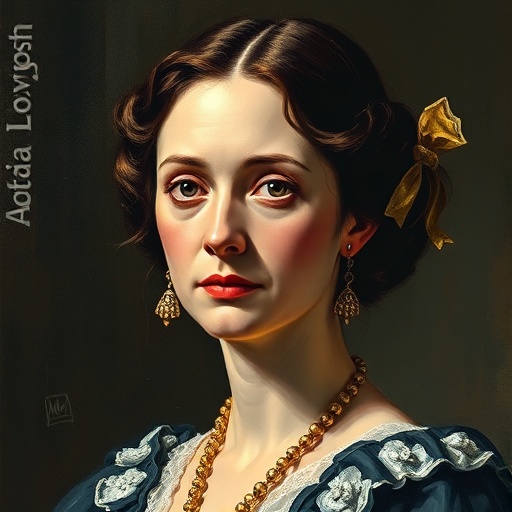
Ada Lovelace (1815–1852) embodied this restless experimental intellect. Trained rigorously in mathematics by her mother to suppress what was feared was her father Lord Byron's poetic temperament, she fused logic with imagination. Her notes on Babbage's Analytical Engine — three times longer than the original paper she translated — demonstrated genuine originality: she conceived the first algorithm and speculated machines might compose music, far exceeding her collaborator's own vision.
The 1830s–1840s were the crucible of modern science. Faraday was transforming electromagnetic theory, Darwin compiling observations, and Babbage designing programmable mechanical computation. The Romantic-to-Victorian transition celebrated both poetic imagination and empirical method. Yet women were barred from universities and scientific societies. Lovelace conducted her intellectual laboratory through correspondence and private study, relying on rare male collaborators willing to engage her as an intellectual equal in a world that structurally excluded her.
AI-generated insights based on extensive research and information for context. Factual errors? Email [email protected].
Your cart is empty