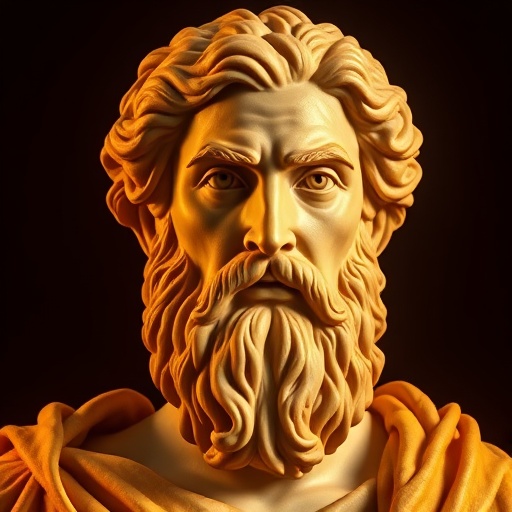
Homer — "No man who fights with gods will live long or hear his children prattling about …"
No man who fights with gods will live long or hear his children prattling about his knees when he returns from battle.
No man who fights with gods will live long or hear his children prattling about his knees when he returns from battle.
Click any product to generate a realistic preview. Up to 3 at a time.
* Initial load can take up to 90 seconds — revising the preview in another color is nearly instant.
"The gods envy us. They envy us because we're mortal, because any moment may be our last. Everything is more beautiful because we're doomed. You will never be lovelier than you are now. We will never b…"
"As the generations of leaves, so are those of men."
"Then welcome fate! 'Tis true I perish, yet I perish great: Yet in a mighty deed I shall expire, Let future ages hear it, and admire!"
"Very like leaves upon this earth are the generations of men -- old leaves, cast on the ground by wind, young leaves the greening forest bears when spring comes in. So mortals pass; one generation flow…"
"There is no favor in the spear."
Greek epic poet traditionally credited with the Iliad and the Odyssey, the foundational works of Western literature. Closely associated with Hesiod (near-contemporary Greek poet of Theogony and Works and Days). For an intellectual contrast, see Plato, Greek philosopher of the Republic — Republic Book X bans the poets from the ideal city, with Homer as the explicit target — Plato argued Homer's gods set immoral examples and that poetry corrupts moral education. The founding philosophy-versus-poetry quarrel of Western thought.
Found in 1 providers: gemini
1 source checked
Your cart is empty