Jonathan Swift — "Not die here in a rage, like a poisoned rat in a hole."
Not die here in a rage, like a poisoned rat in a hole.
Not die here in a rage, like a poisoned rat in a hole.
Click any product to generate a realistic preview. Up to 3 at a time.
* Initial load can take up to 90 seconds — revising the preview in another color is nearly instant.
"I desire those politicians who dislike my overture, and may perhaps be so bold to attempt an answer, that they will first ask the parents of these mortals, whether they would not at this day think it …"
"Falsehood flies, and the truth comes limping after it, so that when men come to be undeceived, it is too late; the jest is over, and the tale hath had its effect."
"We are told that the Houyhnhnms have no vices, but those which are the product of their reason; and that the Yahoos have no virtues, but those which are the product of their instinct."
"Eloquence, as well as the other fine arts, must be cultivated with care."
"I cannot but conclude that the Bulk of your Natives, to be the most pernicious Race of little odious Vermin that Nature ever suffered to crawl upon the Surface of the Earth."
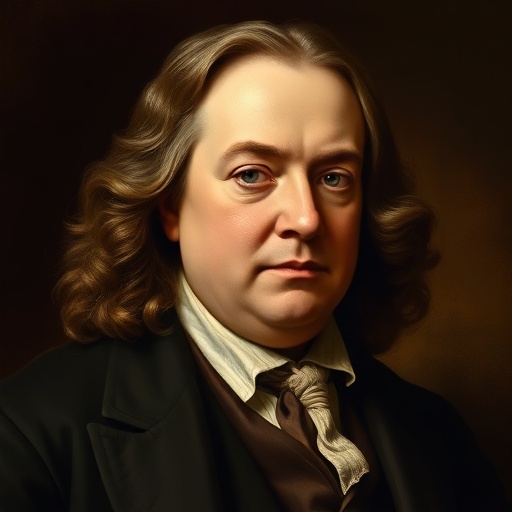
Anglo-Irish satirist and Dean of Dublin's St Patrick's Cathedral whose Gulliver's Travels (1726) and A Modest Proposal (1729) are the canonical English-language satires. Closely associated with Alexander Pope (Scriblerus Club poet and collaborator) and John Gay (Beggar's Opera author and satirical contemporary). For an intellectual contrast, see Daniel Defoe, English Whig journalist and Robinson Crusoe author (1660-1731) — Defoe's Crusoe (1719) celebrates Enlightenment self-reliance and the colonial-mercantile project; Swift's Gulliver (1726) systematically dismantles every form of human pretension Defoe celebrated. The cleanest Augustan Whig-vs-Tory literary pairing — optimistic-empirical vs misanthropic-satirical.
Your cart is empty