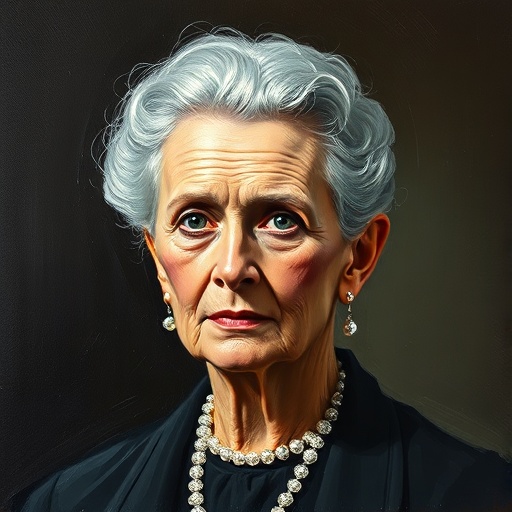
Marie Curie — "Nothing in life is to be feared, it is only to be understood."
Nothing in life is to be feared, it is only to be understood.
Nothing in life is to be feared, it is only to be understood.
Click any product to generate a realistic preview. Up to 3 at a time.
* Initial load can take up to 90 seconds — revising the preview in another color is nearly instant.
"I have been reproached for having given myself to science. I have been reproached for having neglected my family. I have been reproached for having neglected my country. I have been reproached for hav…"
"We must believe in the human spirit, which is a powerful weapon."
"A scientist in his laboratory is not only a technician: he is also a child placed before natural phenomena which impress him like a fairy tale."
"The older one gets, the more one feels that the present moment must be enjoyed, comparable to a state of grace."
"One never notices what has been done; one can only see what remains to be done."
Found in 1 providers: deepseek
1 source checked
Fear comes from ignorance, not from the thing itself. When something seems threatening or overwhelming, the right response is not to avoid it but to study it, learn how it works, and grasp its mechanisms. Once you understand something clearly, the anxiety surrounding it dissolves because you can see what it actually is and how to handle it. Knowledge replaces dread with competence and calm judgment.
Curie spent her career handling radium and polonium, substances whose dangers were unknown and eventually killed her. She pushed into radioactivity precisely by treating mysterious phenomena as problems to dissect, not forces to avoid. As the first woman to win a Nobel Prize and the only person to win in two sciences, she faced poverty, sexism, and xenophobia in Paris by meeting each obstacle with methodical study rather than retreat, embodying this principle daily.
Curie worked from the 1890s through the 1930s, an era when X-rays and radioactivity were newly discovered and widely feared or mystified. Superstition still shadowed science, women were barred from most universities, and Europe was convulsed by two world wars. Public anxiety about invisible rays, disease, and rapid technological change made her insistence on rational understanding over fear a direct rebuke to the era's tendency toward panic and pseudoscience.
AI-generated insights based on extensive research and information for context. Factual errors? Email [email protected].
Your cart is empty