What it means
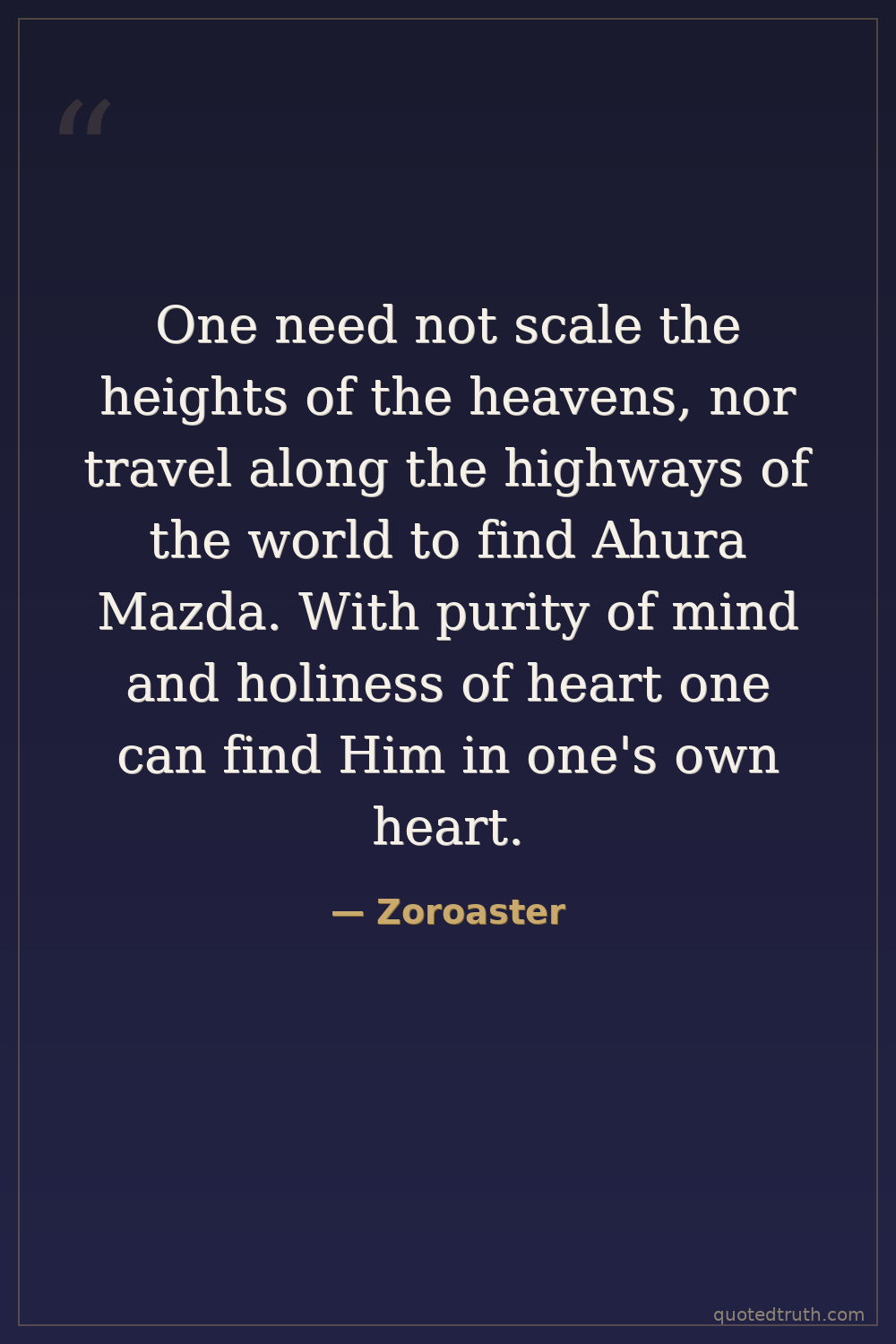
You don't need to embark on grand journeys, climb mountains, or search distant lands to encounter the divine. God is not hidden somewhere far away waiting to be discovered through physical effort or ritual pilgrimage. Instead, the sacred presence lives within you, accessible through inner clarity and moral integrity. Clean your thoughts, keep your heart honest, and you'll find the divine already residing there, right inside your own being.
Relevance to Zoroaster
Zoroaster founded a faith centered on Ahura Mazda, the 'Wise Lord,' and taught that righteousness flows from the triad of good thoughts, good words, and good deeds. As a prophet who rejected the elaborate ritual sacrifices and priestly intermediaries of his era's polytheistic religion, he stressed personal ethical responsibility. This saying directly mirrors his reform: purity of mind and heart, not external ceremony, is the true path to the divine he proclaimed.
The era
Zoroaster preached in ancient Persia (roughly 1500–1000 BCE) during a time dominated by polytheistic Indo-Iranian religion heavy with blood sacrifices, intoxicating haoma rituals, and powerful priestly castes mediating between humans and many gods. Temples, pilgrimages, and external offerings defined piety. Against this backdrop, his message of an internal, ethical monotheism was revolutionary, shifting spirituality from ritual performance and sacred geography toward individual conscience and interior moral life.
AI-generated insights based on extensive research and information for context. Factual errors? Email [email protected].