What it means
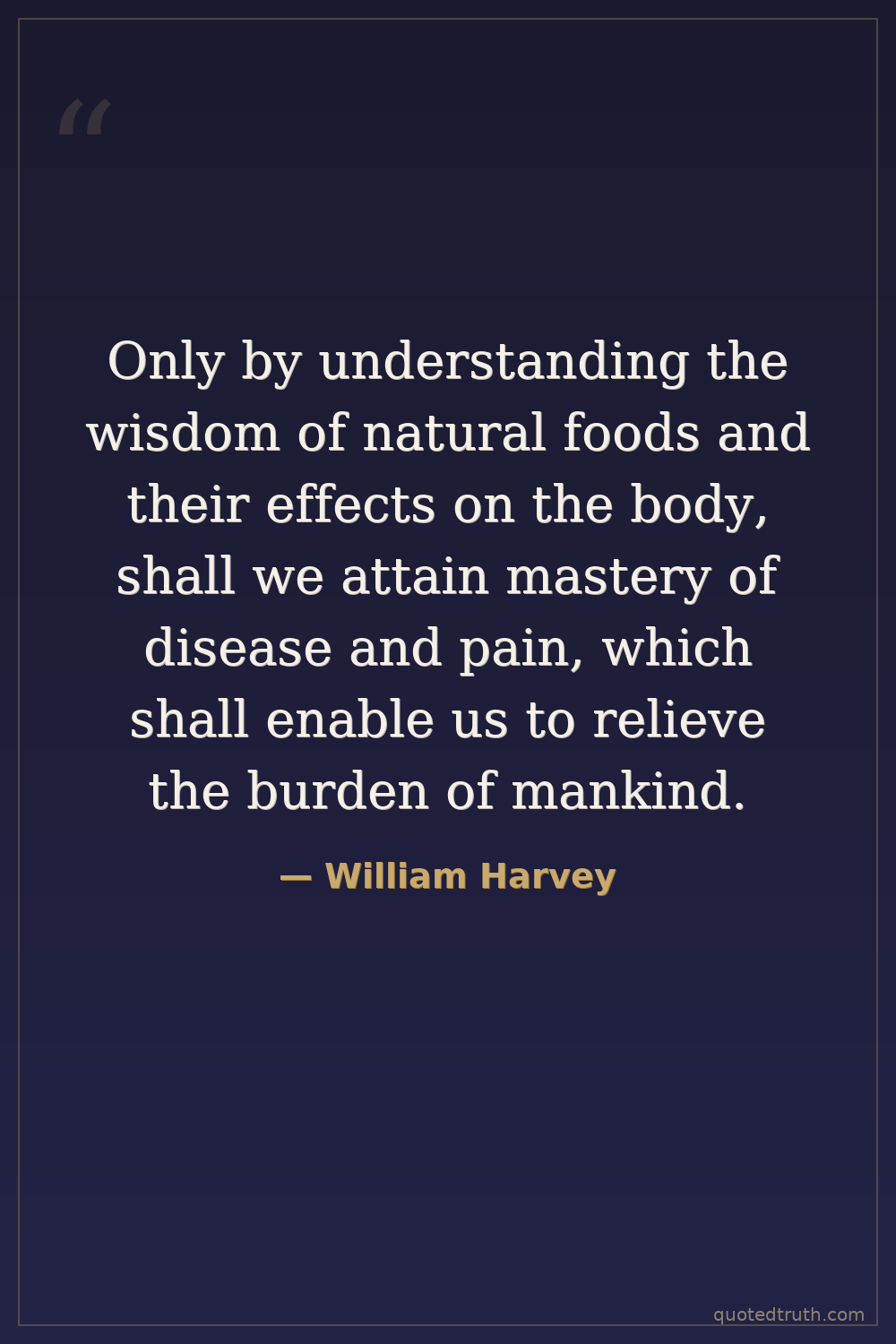
Understanding how natural foods affect the body is presented here as the core of medical science. Rather than inherited doctrine, direct knowledge of nutrition's physiological effects unlocks the ability to treat disease systematically. Once those mechanisms are understood, medicine becomes a tool for reducing human suffering at scale—a vision grounded in observable, natural evidence rather than speculation or received authority.
Relevance to William Harvey
Harvey spent his career proving careful observation overturns inherited dogma—his 1628 discovery of blood circulation demolished 1,400 years of Galenic teaching. That same empirical commitment extends naturally to diet and physiology. As physician to James I and Charles I, he witnessed disease up close and held that medicine's true purpose was humanitarian: relieving real suffering, not defending ancient texts. His willingness to follow evidence wherever it led defines this sentiment.
The era
Harvey worked during the early Scientific Revolution, when Galenic humoral theory still dominated medicine—diet was literally prescribed to balance the body's four humors. Plague and famine were recurring realities across Europe. Vesalius had challenged anatomical dogma; Paracelsus pushed chemical remedies over herbs. In this contested landscape, arguing that empirical study of natural foods—not received authority—should guide medicine was a meaningful intellectual position, aligned with the era's broader shift toward observation-based science.
AI-generated insights based on extensive research and information for context. Factual errors? Email [email protected].