What it means
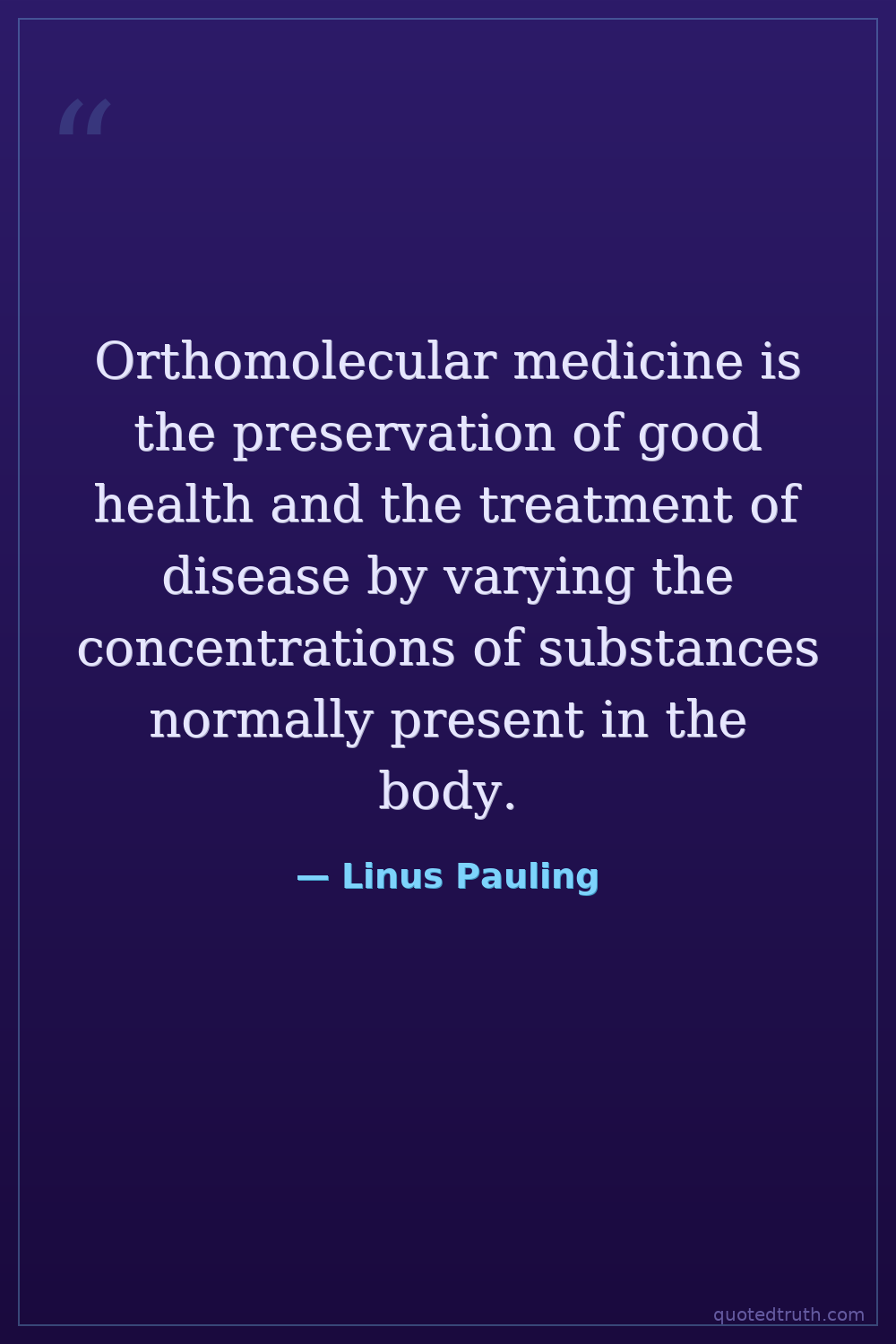
This quote defines orthomolecular medicine — an approach to health that works by adjusting the levels of naturally occurring substances in the body, such as vitamins, minerals, and amino acids. Rather than introducing synthetic drugs foreign to the body, the goal is to restore or maintain optimal concentrations of what the body already uses. Pauling argued this could both prevent illness and treat disease at the molecular level.
Relevance to Linus Pauling
Pauling, who won the 1954 Nobel Prize in Chemistry for his discoveries about chemical bonds and molecular structure, coined the term 'orthomolecular' in 1968. He famously championed megadose Vitamin C as a defense against colds and cancer — a controversial stance even among scientists. This quote captures his conviction that chemistry and molecular thinking belonged inside medicine, extending his lab work directly into human biology and nutrition.
The era
Pauling introduced orthomolecular medicine in 1968, amid deep public skepticism toward pharmaceutical industry dominance and processed food. The late 1960s and 1970s saw explosive growth in natural health movements, vitamin supplementation, and holistic medicine. Meanwhile, nutritional science was still young — the roles of micronutrients were only beginning to be understood. This made Pauling's framework both radical and resonant to a public hungry for alternatives to conventional drugs.
AI-generated insights based on extensive research and information for context. Factual errors? Email [email protected].