What it means
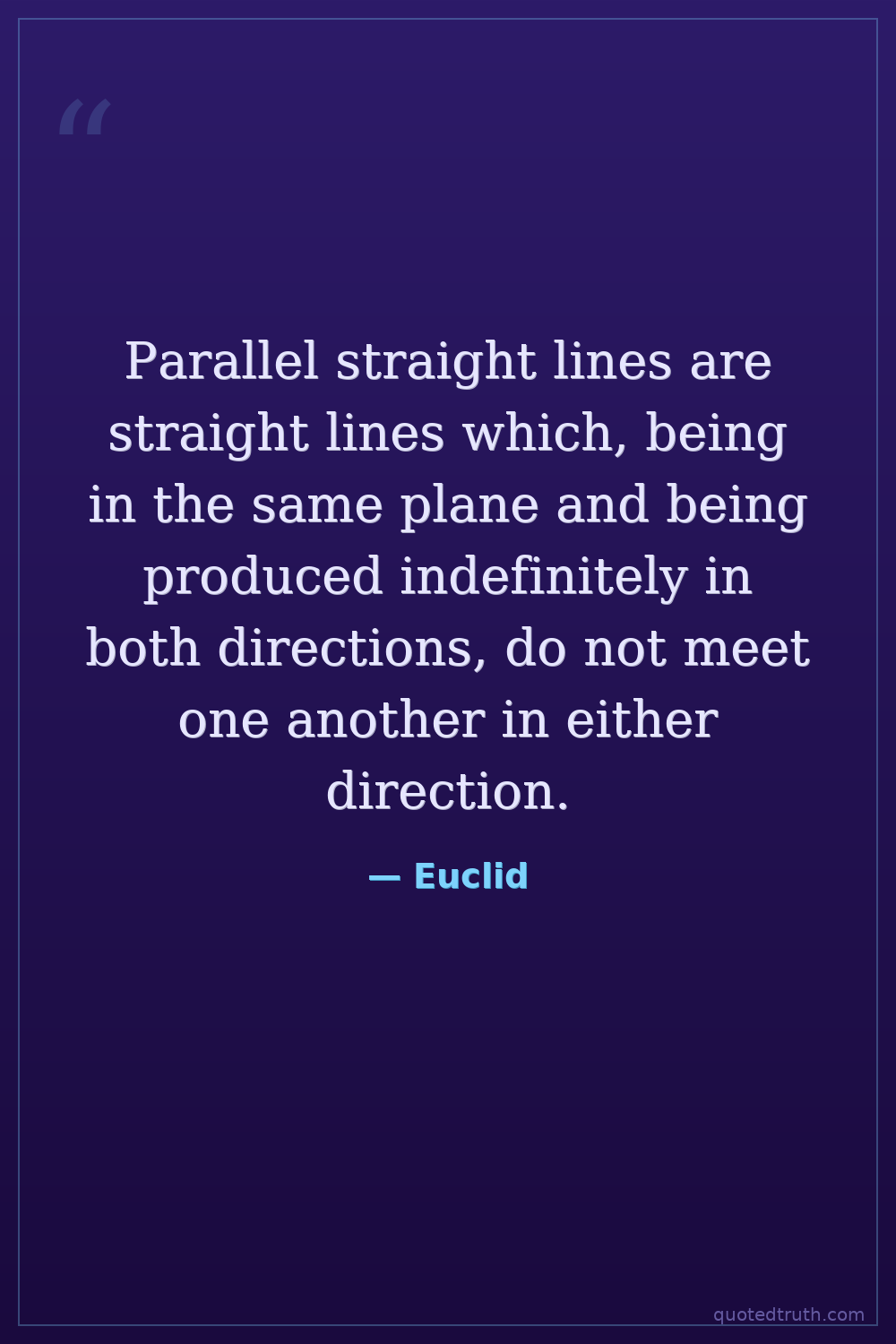
Two straight lines in the same flat plane are parallel if, no matter how far you extend them in both directions, they never cross. This definition anchors the concept through a precise, testable condition — infinite non-intersection within a shared plane — rather than vague intuition. It also distinguishes parallel lines from skew lines, which never meet but aren't coplanar, giving geometry an unambiguous foundation for all reasoning that follows.
Relevance to Euclid
This is Definition 23 from Book I of Euclid's Elements, written around 300 BCE. It exemplifies his core method: before proving anything, define every term exactly. Euclid constructed all of plane geometry from just 23 definitions, 5 postulates, and 5 common notions. This definition directly underpins his famous fifth postulate — the source of two thousand years of mathematical debate — showing how one carefully worded definition can anchor entire branches of thought.
The era
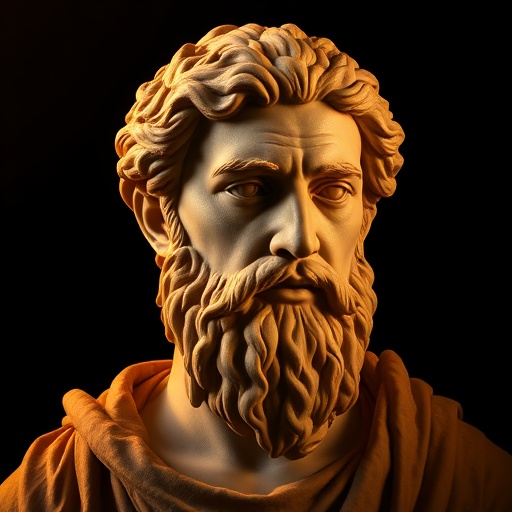
Around 300 BCE in Alexandria, the Ptolemaic rulers patronized scholarship at the great Library, making it the Hellenistic world's intellectual capital. Greek thinkers were transforming geometry from Egyptian land-measurement into an abstract, proof-based science. Plato had declared mathematics the gateway to eternal truth. In this climate, rigorous definitions were a philosophical act — every term had to be unambiguous before logic could proceed, asserting that reason, not measurement, grounds knowledge.
AI-generated insights based on extensive research and information for context. Factual errors? Email [email protected].