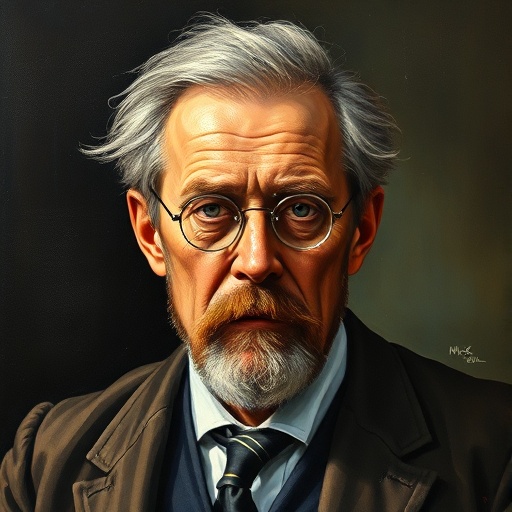
Max Planck — "Physics is the study of nature, and nature is the manifestation of God."
Physics is the study of nature, and nature is the manifestation of God.
Physics is the study of nature, and nature is the manifestation of God.
Click any product to generate a realistic preview. Up to 3 at a time.
* Initial load can take up to 90 seconds — revising the preview in another color is nearly instant.
"The quantum hypothesis is not a hypothesis; it is a fact."
"I am convinced that the world is governed by laws of a mathematical nature."
"The scientist's highest aim is to find the truth."
"The scientist must be a dreamer and a realist at the same time."
"It was a dark and stormy night..."
Often attributed, reflecting his deistic views, but a direct quote with this precise phrasing can be hard to pinpoint.
Date: Unknown
ShockingFound in 1 providers: grok
1 source checked
Planck is saying that studying the physical world is ultimately a way of encountering the divine. Scientific investigation and religious reverence are not opposed; they point at the same underlying reality. Nature's laws, patterns, and structures are understood here as expressions of a creative intelligence, so doing physics carefully is itself a form of learning about God through the orderly behavior of matter and energy.
Planck was a devout Lutheran who served as a church elder and wrote essays reconciling science and faith, such as Religion and Natural Science. As the founder of quantum theory, he spent his life uncovering nature's deepest constants, yet insisted that behind every natural law stood a conscious, intelligent mind. This quote mirrors his lifelong conviction that rigorous physics and sincere religious belief not only coexist but reinforce each other.
Planck worked from the late 1800s through WWII, when positivism, Darwinism, and Freudian thought were pushing religion out of intellectual life. Quantum mechanics and relativity were dissolving classical certainties, and many scientists embraced materialism. Against that backdrop, and amid the horrors of Nazi Germany that killed his son Erwin, Planck publicly defended the compatibility of science and faith, making such statements a direct counterweight to the secularizing currents of early twentieth-century Europe.
AI-generated insights based on extensive research and information for context. Factual errors? Email [email protected].
Your cart is empty