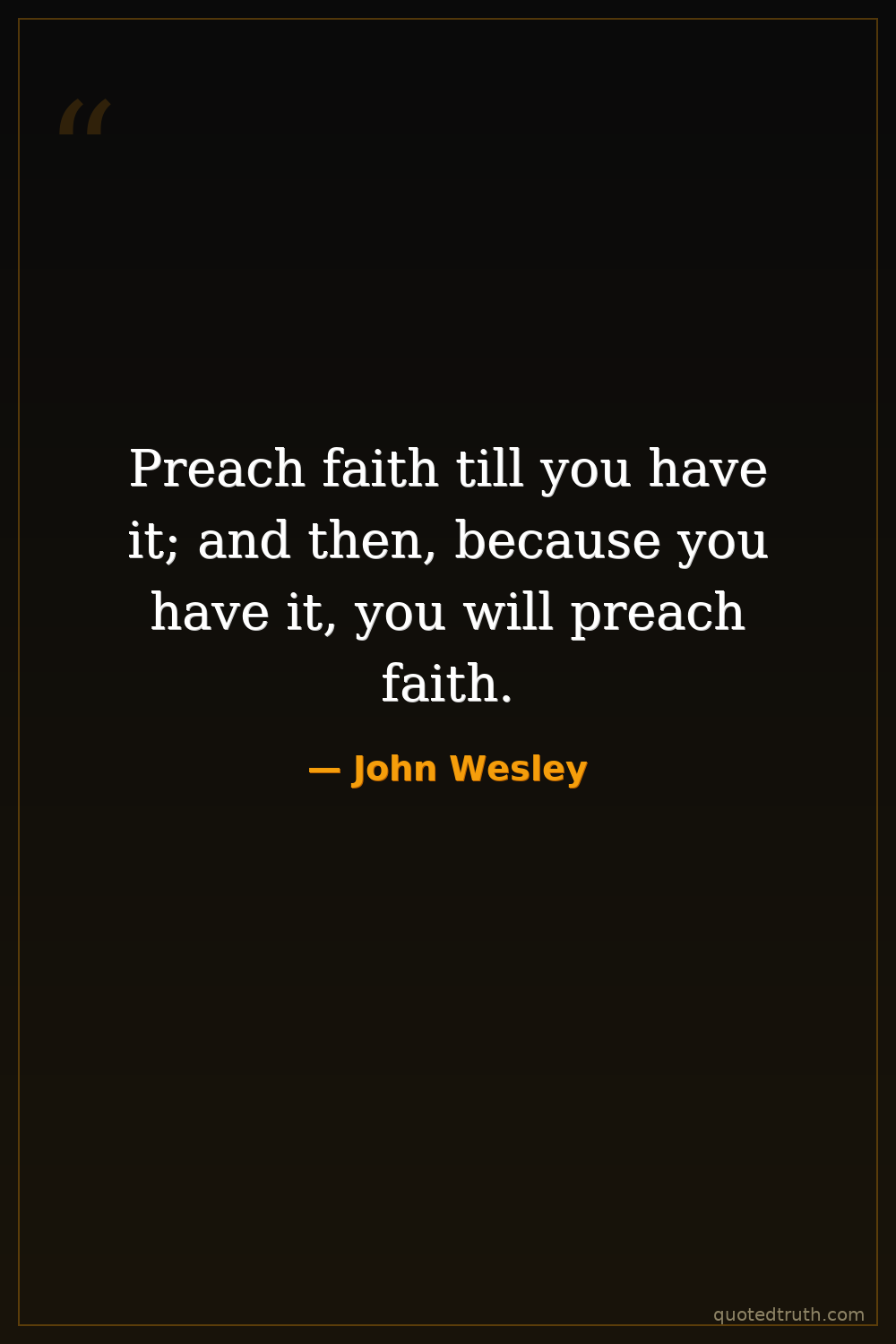
John Wesley — "Preach faith till you have it; and then, because you have it, you will preach fa…"
Preach faith till you have it; and then, because you have it, you will preach faith.
Preach faith till you have it; and then, because you have it, you will preach faith.
Click any product to generate a realistic preview. Up to 3 at a time.
* Initial load can take up to 90 seconds — revising the preview in another color is nearly instant.
"I am no more afraid of the devil than I am of a fly."
"I am never solitary, for I am never alone."
"The best of all is, God is with us."
"I have often thought that the difference between the Church of England and the Dissenters is not so great as some imagine."
"I have often thought, that if I were to choose a text to preach from, it should be 'God is love.'"
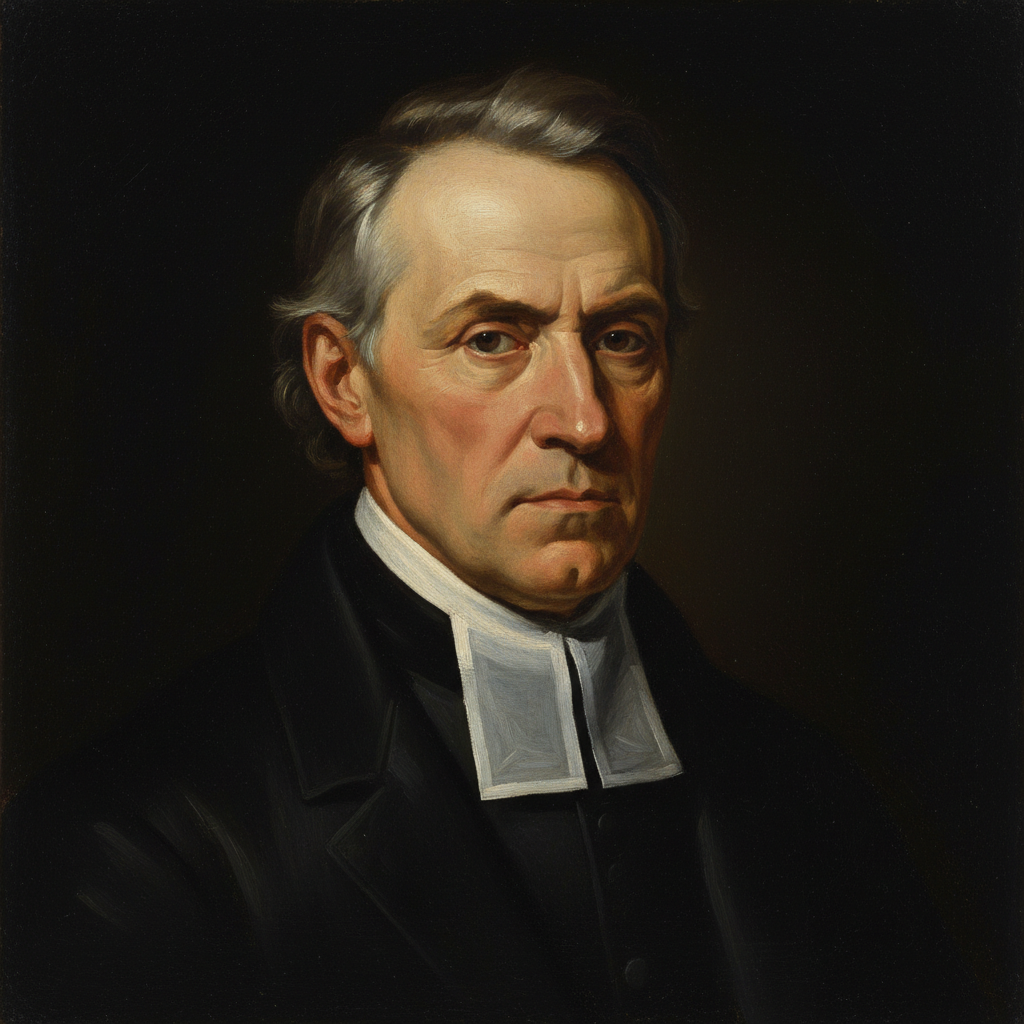
English Anglican cleric and founder of Methodism, whose open-air preaching and class-meeting structure created the largest 18th-century evangelical revival. Closely associated with Charles Wesley (his hymn-writing brother) and George Whitefield (early co-revivalist, later doctrinal opponent). For an intellectual contrast, see George Whitefield, Calvinist evangelical revivalist — Whitefield's predestinarian Calvinism vs Wesley's free-grace Arminian theology split the early Methodist movement permanently in the 1739-41 break. The founding evangelical Calvinist-Arminian schism — the two parallel evangelical traditions American Christianity descends from.
Found in 1 providers: grok
1 source checked
Act as if you already believe something, and through that practice, genuine belief will eventually take root. Fake it until you make it—but applied to spiritual conviction. The act of speaking and living as though something is true can transform performance into authentic experience. Doing precedes being; commitment to action shapes inner reality over time.
Wesley was a tireless evangelical preacher who rode 250,000 miles on horseback delivering over 40,000 sermons. Early in his ministry he famously doubted his own faith even while preaching it—his Aldersgate conversion in 1738 came after years of religious practice without felt certainty. This quote captures his hard-won insight that action and experience forge conviction.
18th-century Protestant England was torn between formal Anglican ritual and the emotional awakening of the Great Revival. Wesley preached in fields to thousands when churches barred him. An era of industrialization had displaced workers spiritually and physically; experiential, active faith offered meaning where doctrine felt cold. Methodism's emphasis on doing over mere believing reshaped working-class religious life.
AI-generated insights based on extensive research and information for context. Factual errors? Email [email protected].
Your cart is empty