What it means
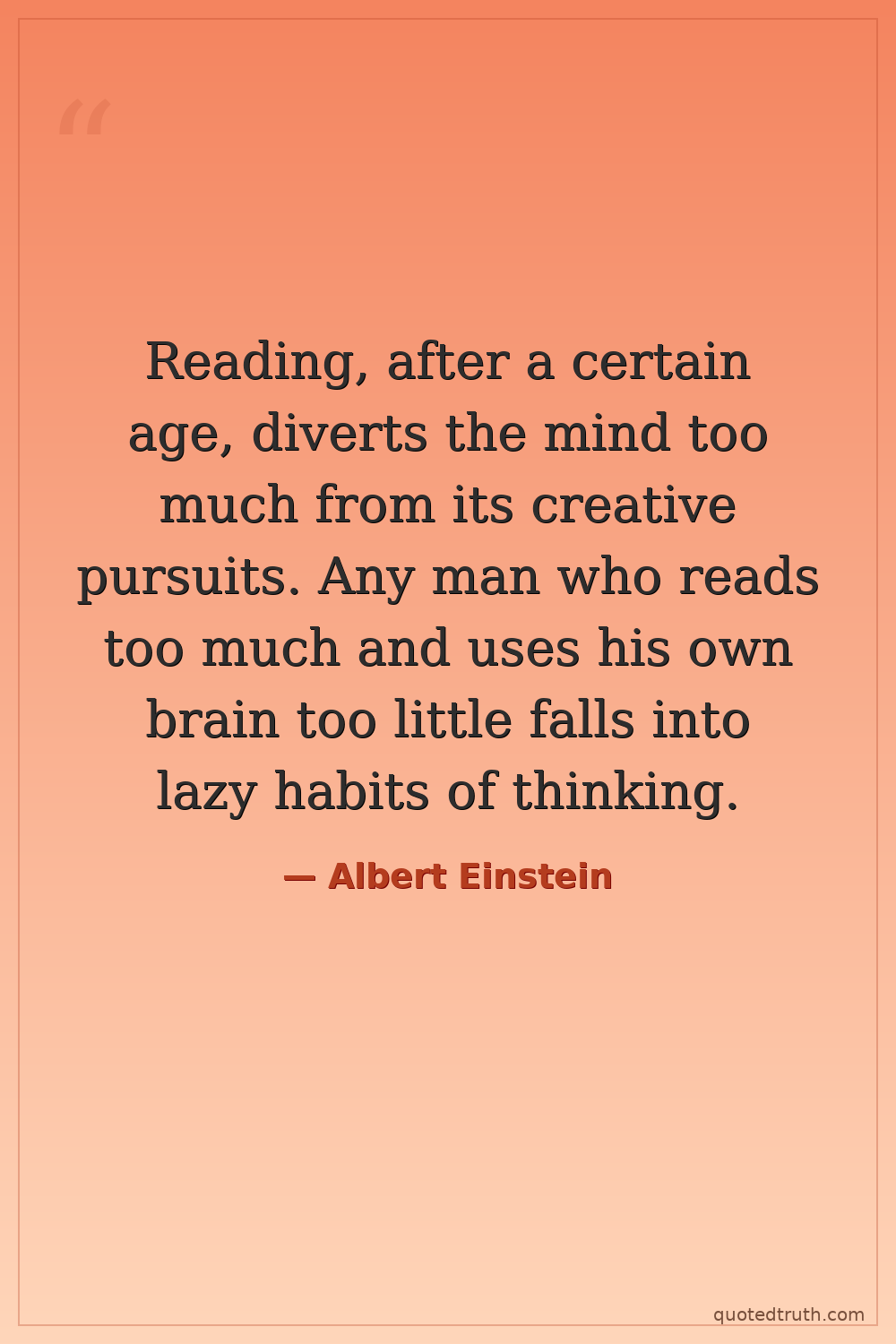
Passive consumption of others' ideas—books, articles, media—can crowd out the mental space needed for original thought. Beyond a certain point, constantly absorbing what others have concluded becomes a substitute for genuine reasoning. True intellectual development requires wrestling with problems independently. The mind must generate and create, not merely receive and store. Accumulating knowledge without thinking for yourself breeds intellectual dependency, not wisdom.
Relevance to Albert Einstein
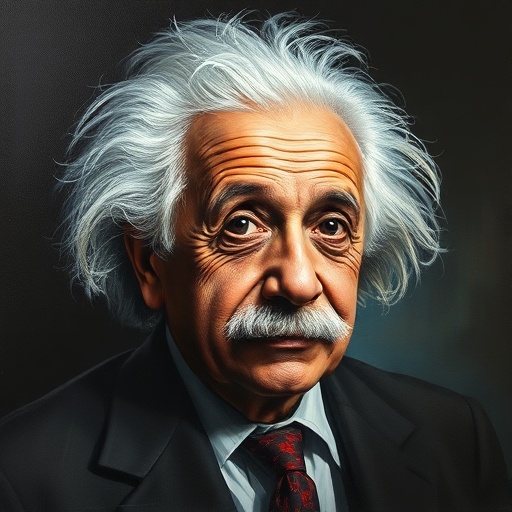
Einstein developed his most revolutionary ideas—special and general relativity—through thought experiments, not library research. He was famously self-directed, spending hours imagining himself riding light beams. He distrusted rote memorization, noting facts could simply be looked up. His 1905 miracle-year breakthroughs emerged from pure imaginative reasoning while working as a patent clerk, largely outside conventional academic reading and research circles.
The era
The early 20th century saw an explosion of scientific literature and formal university education, pressuring scholars to master ever-growing bodies of published work. Positivism dominated—the view that accumulated empirical knowledge should drive science forward. Einstein's insistence on imaginative reasoning over book-learning was a counter-cultural stance against the prevailing academic model, arriving just as industrialization was training workers to follow instructions rather than think independently.
AI-generated insights based on extensive research and information for context. Factual errors? Email [email protected].