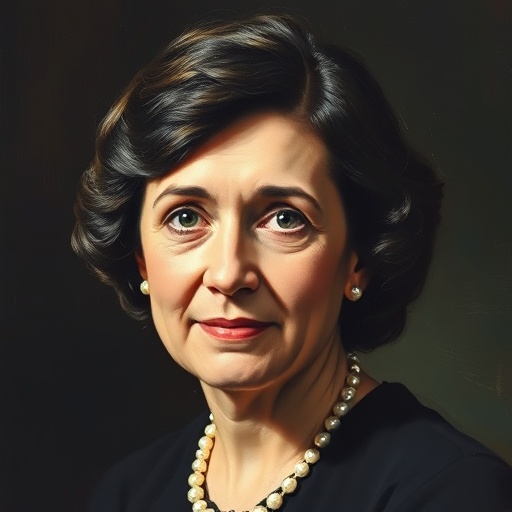
Rosalind Franklin — "Science and everyday life cannot and should not be separated."
Science and everyday life cannot and should not be separated.
Science and everyday life cannot and should not be separated.
Click any product to generate a realistic preview. Up to 3 at a time.
* Initial load can take up to 90 seconds — revising the preview in another color is nearly instant.
"I shall be interested to hear what Bragg has to say about my results."
"The ultimate goal of science is to improve human understanding and welfare."
"My aim is to obtain experimental results that are beyond doubt."
"It's like a helix, only more complicated."
"I am not interested in building models. I am interested in finding out the truth."
Found in 1 providers: deepseek
1 source checked
Science isn't an abstract pursuit divorced from everyday human experience — it's embedded in the food we eat, the medicine we take, and the decisions we make daily. Treating them as separate creates a dangerous gap where ignorance and misinformation thrive. Scientific literacy belongs to everyone, not just specialists, and applying rigorous thinking to daily life improves how individuals and societies navigate complex problems and make better choices.
Franklin embodied this principle throughout her career. Her X-ray crystallography work — producing the landmark Photo 51 — directly revealed DNA's physical double-helix structure, with immediate implications for medicine and genetics. She also studied coal microstructure for industrial applications and tobacco mosaic virus for public health. Working in wartime London, she understood science as a tool shaping survival, not abstract theory. Her commitment to evidence over reputation defined her professional identity.
Franklin worked during the post-WWII 1950s, when science simultaneously promised salvation — penicillin, vaccines, nuclear power — and existential dread from atomic weapons and Cold War arms races. Society was rapidly bifurcating into experts who understood science and civilians who feared it. Women like Franklin were increasingly pushed out of research roles as postwar society reverted to prewar gender norms. Her insistence that science belongs to everyday life challenged the gatekeeping that kept it an exclusive male academic preserve.
AI-generated insights based on extensive research and information for context. Factual errors? Email [email protected].
Your cart is empty