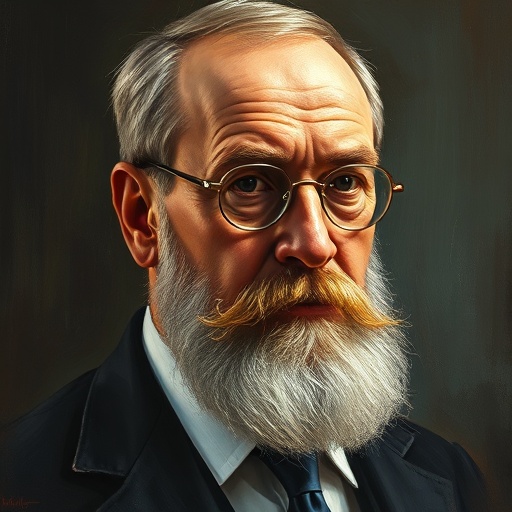
Robert Koch — "Science knows no nationality, because knowledge is the common property of mankin…"
Science knows no nationality, because knowledge is the common property of mankind.
Science knows no nationality, because knowledge is the common property of mankind.
Click any product to generate a realistic preview. Up to 3 at a time.
* Initial load can take up to 90 seconds — revising the preview in another color is nearly instant.
"It is a great responsibility to be a physician, for upon us depends the health of the community."
"The discovery of the tubercle bacillus was the culmination of many years of patient research."
"The advancement of science is a collective effort, and I am proud to be a part of it."
"The development of solid culture media was a turning point in bacteriology."
"I have always tried to be as objective as possible in my scientific investigations."
Found in 1 providers: grok
1 source checked
Scientific discovery transcends political borders and national identity. When someone unlocks a truth about how the world works — how diseases spread, how bacteria behave — that truth belongs to everyone, regardless of where the discoverer was born. Nations may compete, but verified knowledge cannot be owned by a flag. It becomes part of the shared foundation all future scientists everywhere build upon, making every breakthrough a gift to the whole species, not just one country.
Koch was a German scientist whose discoveries — isolating the tuberculosis bacillus in 1882 and codifying Koch's Postulates — immediately became global medical tools adopted by French, British, Japanese, and American researchers alike. Despite working during intense Franco-German rivalry, he collaborated internationally and received the 1905 Nobel Prize in Physiology or Medicine, a recognition that crossed national politics and confirmed his belief that science's obligations run to humanity, not governments.
Koch worked during peak European nationalism, colonial rivalry, and post-1870 Franco-German hostility. Yet this same era produced international scientific congresses, rapid cross-border exchange of germ theory, and the Nobel Prize system — all premised on merit over nationality. Tuberculosis was killing one in seven Europeans regardless of borders, making the universality of knowledge not just philosophical but urgently practical. His statement pushed back against the tribalism surrounding him.
AI-generated insights based on extensive research and information for context. Factual errors? Email [email protected].
Your cart is empty