What it means
The speaker declares they have made their decision and committed their ideas to writing. They don't care whether contemporaries or distant future generations read the work. If the book sits ignored for a century waiting for the right reader, so be it. The comparison is bold: if God waited thousands of years for someone to truly understand creation, the author can wait too. Patience and conviction matter more than immediate recognition.
Relevance to Johannes Kepler
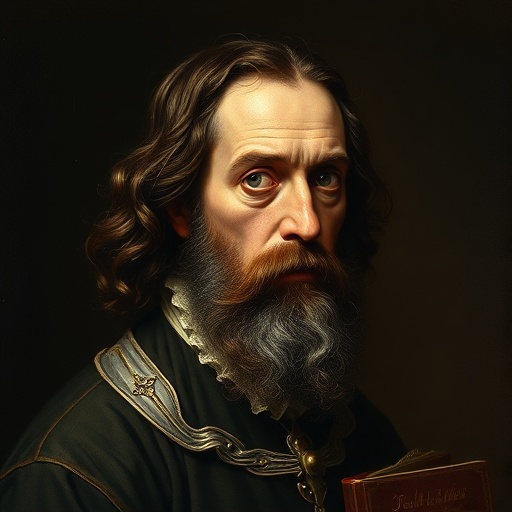
Kepler wrote this in his 1619 Harmonices Mundi, defending work that radically redefined astronomy with his three laws of planetary motion. A devout Lutheran who saw astronomy as reading God's geometric design, he faced rejection from Catholic authorities, poverty, and personal tragedy. His mother was tried for witchcraft. Yet he trusted his mathematics would eventually be vindicated, a conviction realized when Newton built on his laws decades after his death.
The era
The early 1600s saw the Scientific Revolution colliding with entrenched religious authority. Galileo faced Inquisition scrutiny, the Thirty Years' War ravaged Central Europe, and Protestant-Catholic conflict shaped intellectual life. Copernican heliocentrism remained controversial. Printing let ideas survive their authors, but censorship and war threatened scholarship. Kepler worked without academic protection, relying on patrons. Writing for posterity wasn't rhetorical flourish but practical necessity when the present offered few sympathetic readers for mathematical astronomy.
AI-generated insights based on extensive research and information for context. Factual errors? Email [email protected].