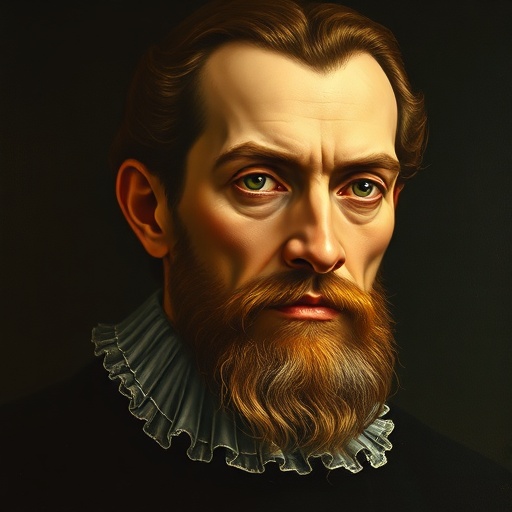
Machiavelli — "Since love and fear can hardly exist together, if we must choose between them, i…"
Since love and fear can hardly exist together, if we must choose between them, it is far safer to be feared than loved.
Since love and fear can hardly exist together, if we must choose between them, it is far safer to be feared than loved.
Click any product to generate a realistic preview. Up to 3 at a time.
* Initial load can take up to 90 seconds — revising the preview in another color is nearly instant.
"Hence it comes that all armed prophets have conquered and unarmed ones have failed."
"The desire to acquire is truly a very natural and common thing; and when men who are able to do so acquire, they are always praised and not blamed; but when they are not able to do so, and yet wish to…"
"In the actions of men, and especially of princes, from which there is no appeal, the end justifies the means."
"For it can be said of men in general that they are ungrateful, fickle, feigners and dissemblers, shirkers of dangers, eager for gain."
"I say that there are three kinds of brains: one that understands things by itself, one that can appreciate what others understand, and one that understands neither by itself nor through others."
Florentine diplomat and political theorist whose The Prince (written 1513) became the founding text of political realism and gave us the adjective 'Machiavellian.' Closely associated with Francesco Guicciardini (fellow Florentine political analyst and historian). For an intellectual contrast, see Erasmus of Rotterdam, Dutch humanist and The Education of a Christian Prince author (1516) — Erasmus's princely-instruction manual was published three years after Machiavelli's, for the same European audience, and is the explicit Christian-virtue alternative to Machiavellian power-realism. The cleanest 'realism vs idealism' founding pairing in modern political theory.
Found in 1 providers: deepseek
1 source checked
Your cart is empty