What it means
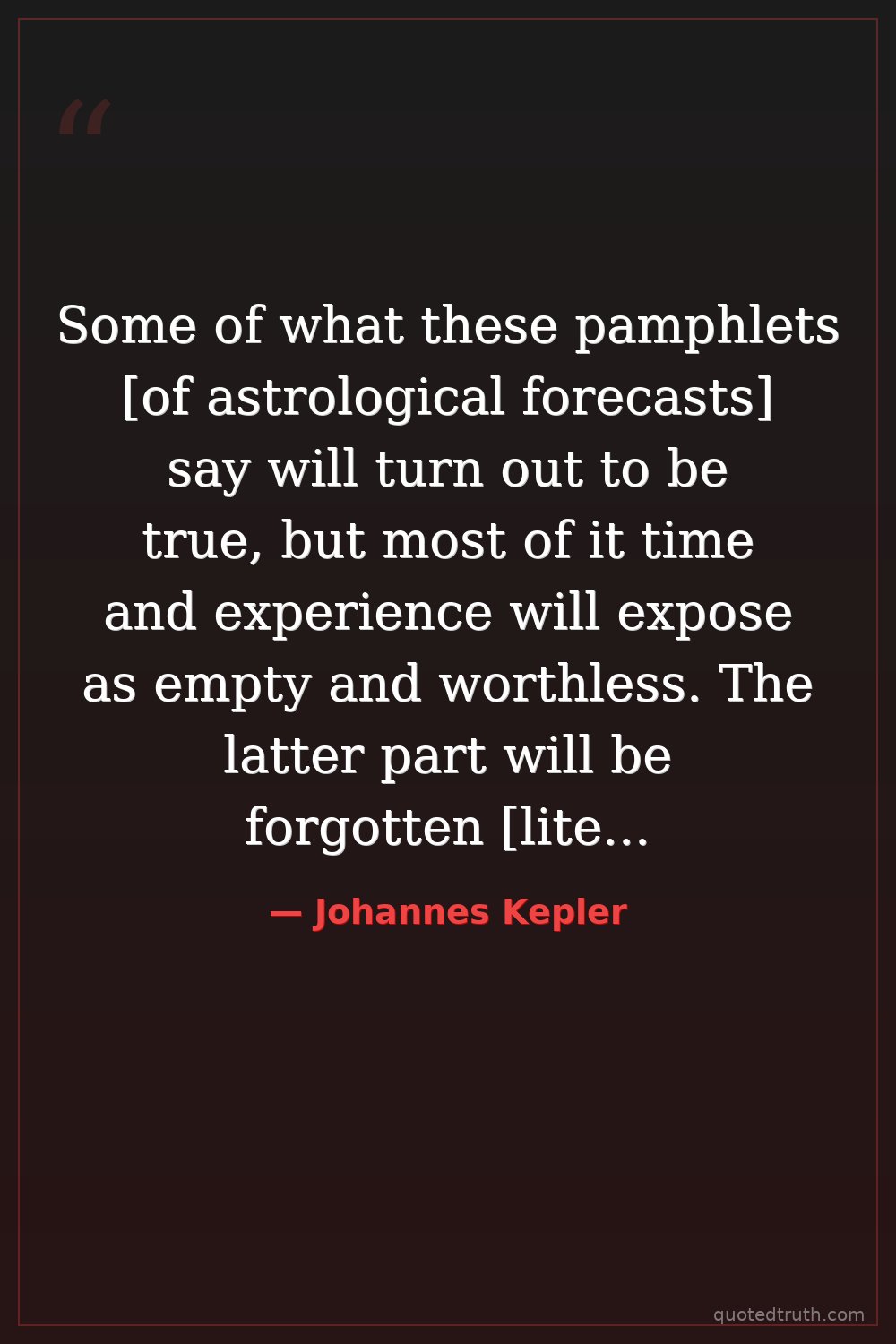
Kepler points out a bias in how people judge predictions: the few guesses that happen to come true get remembered and celebrated, while the many that fail are quietly forgotten. This selective memory makes vague forecasts look far more accurate than they actually are. He is describing what we now call confirmation bias, and warning that popular belief in prophecy rests on forgetting the misses rather than counting them honestly.
Relevance to Johannes Kepler
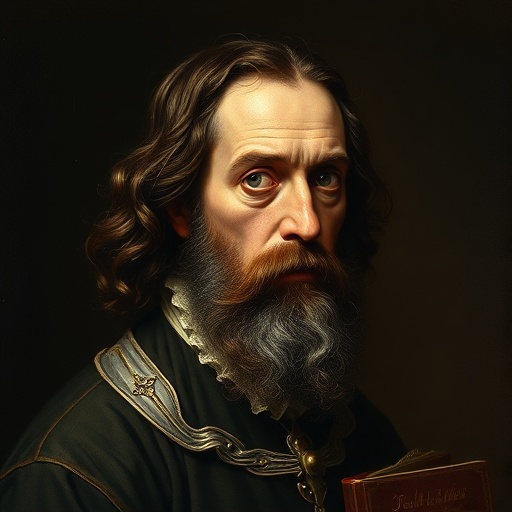
Kepler himself cast horoscopes for patrons and the emperor to earn a living, yet he was openly skeptical of popular astrology. As a mathematician who derived planetary motion from painstaking data, he prized verification over wishful thinking. This remark captures his double life: he tolerated astrology as 'the foolish daughter who feeds her wise mother astronomy,' while privately dismantling its pretensions using the same evidential standards he applied to Mars's orbit.
The era
In early-modern Europe, printed almanacs and astrological pamphlets were bestsellers, and rulers like Rudolf II kept court astrologers. The Scientific Revolution was just beginning: Galileo had turned his telescope skyward, and Kepler was replacing Ptolemaic circles with ellipses. Belief in celestial influence still saturated medicine, politics, and farming, so Kepler's cool statistical critique of prophecy was unusually modern in an age where superstition and emerging empirical science still shared the same printing presses.
AI-generated insights based on extensive research and information for context. Factual errors? Email [email protected].