What it means
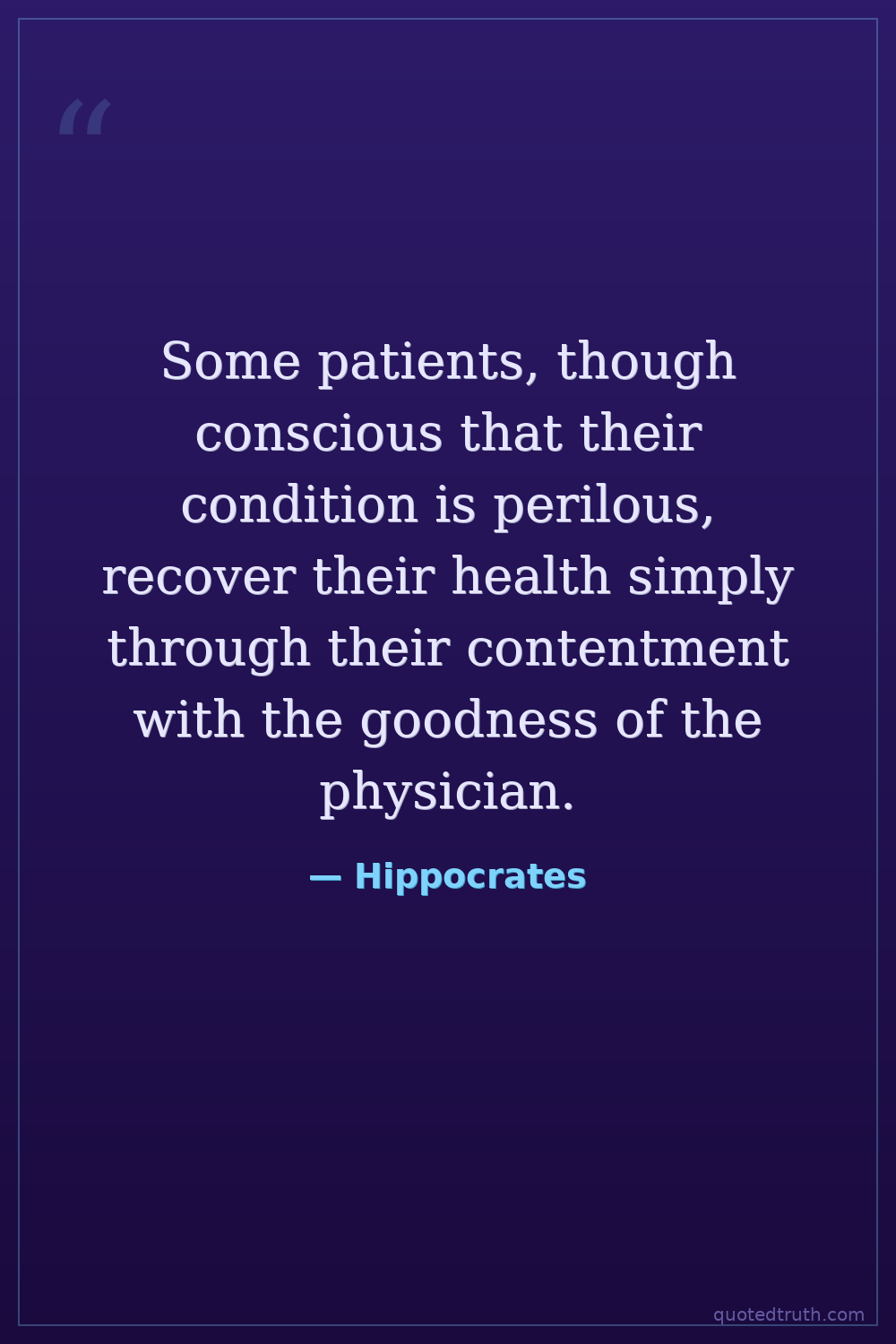
A patient's trust and peace of mind about their physician can itself contribute to physical recovery, even in dangerous illness. The quote recognizes that psychological contentment — confidence in the doctor's competence and moral character — is a genuine healing force, not mere comfort. It captures the mind-body link: emotional security reduces fear, and that reduced fear can shift outcomes toward survival. Medicine, here, is relational as much as technical.
Relevance to Hippocrates
Hippocrates spent his career arguing that medicine requires both clinical skill and ethical character. The Hippocratic Oath binds physicians to virtuous conduct precisely because he believed patients needed to trust their healer completely. His Corpus includes writings on physician bedside manner and prognosis, showing he studied the physician's effect on patients. As a traveling healer who treated strangers, earning trust quickly was essential — he understood firsthand that confidence in a physician actively heals.
The era
In 5th-century BCE Greece, healing was primarily religious — temple priests of Asclepius performed rituals, and illness was seen as divine punishment. Hippocrates was among the first to argue disease had natural causes and that the physician's rational skill and character, not gods, drove recovery. In that context, attributing healing to a patient's trust in a human physician was radical. It shifted medicine's foundation from supernatural intervention to the human relationship between healer and patient.
AI-generated insights based on extensive research and information for context. Factual errors? Email [email protected].