What it means
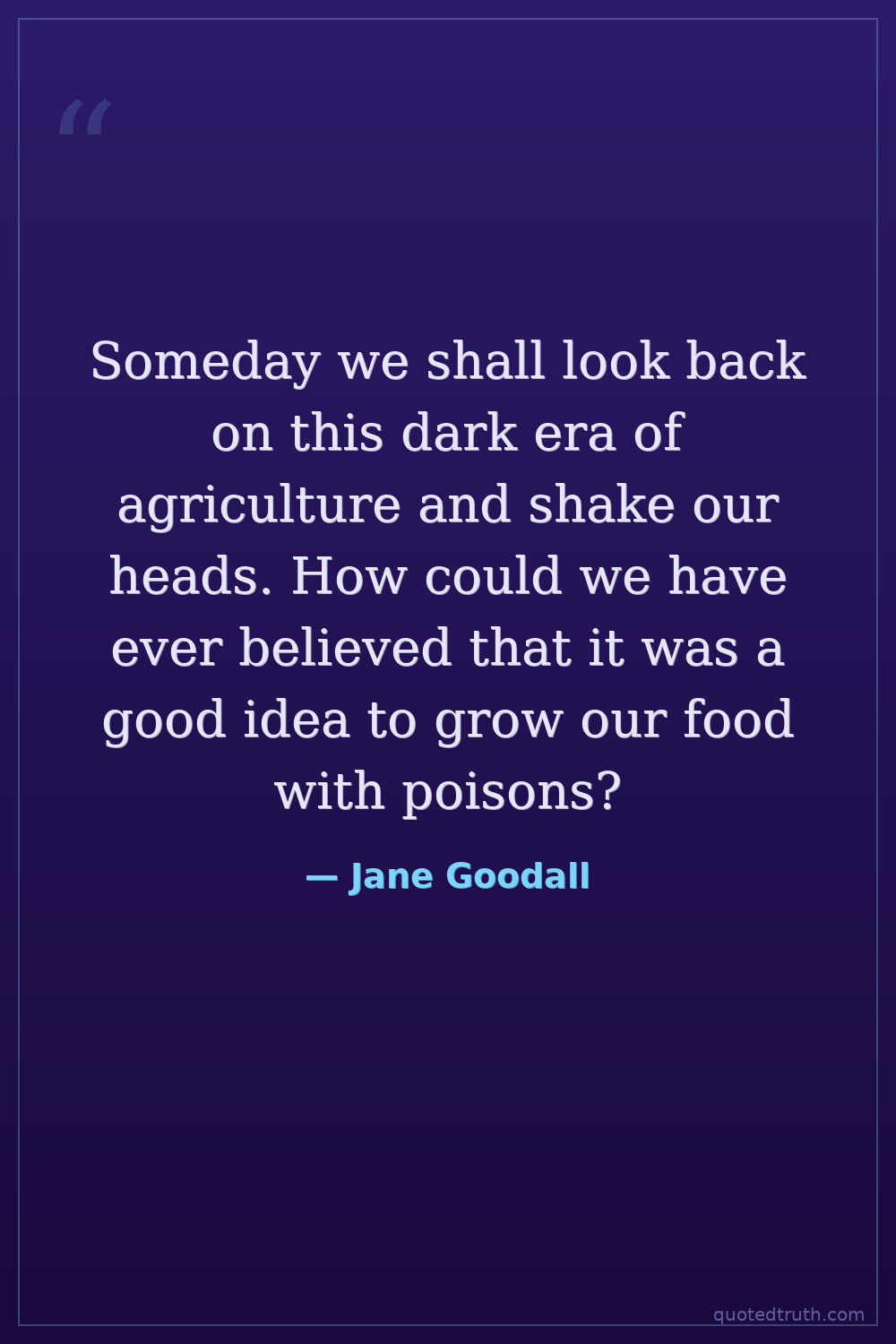
Future generations, Goodall predicts, will view today's chemical-dependent farming as a catastrophic mistake. Industrial agriculture relies heavily on synthetic pesticides and herbicides to maximize yields, but these compounds poison soil, water, wildlife, and human health. She frames the present as a 'dark era' — a period of collective blindness we will one day recognize and regret, much as society later condemned DDT or leaded gasoline after decades of documented harm.
Relevance to Jane Goodall
Goodall spent over 60 years studying chimpanzees in Gombe, Tanzania, witnessing firsthand how agricultural expansion destroys habitat. This transformed her into a global environmental advocate. Through the Jane Goodall Institute and Roots & Shoots program, she champions sustainable land use. Her intimate knowledge of ecosystems — gained watching chimps interact with forest environments — fuels her conviction that chemical farming ruptures the natural relationships all species, including humans, ultimately depend on.
The era
Goodall's contemporary era saw industrial agriculture, born from post-WWII synthetic chemistry, dominate global food production. Glyphosate became the world's most-used herbicide despite mounting cancer litigation. Bee colony collapse disorder alarmed scientists globally. Soil microbiome research revealed lasting damage from chemical inputs. Simultaneously, the organic food movement surged, and regulators faced pressure to restrict neonicotinoids. This tension between chemical-industry lobbying and ecological science made Goodall's critique both urgent and increasingly mainstream.
AI-generated insights based on extensive research and information for context. Factual errors? Email [email protected].