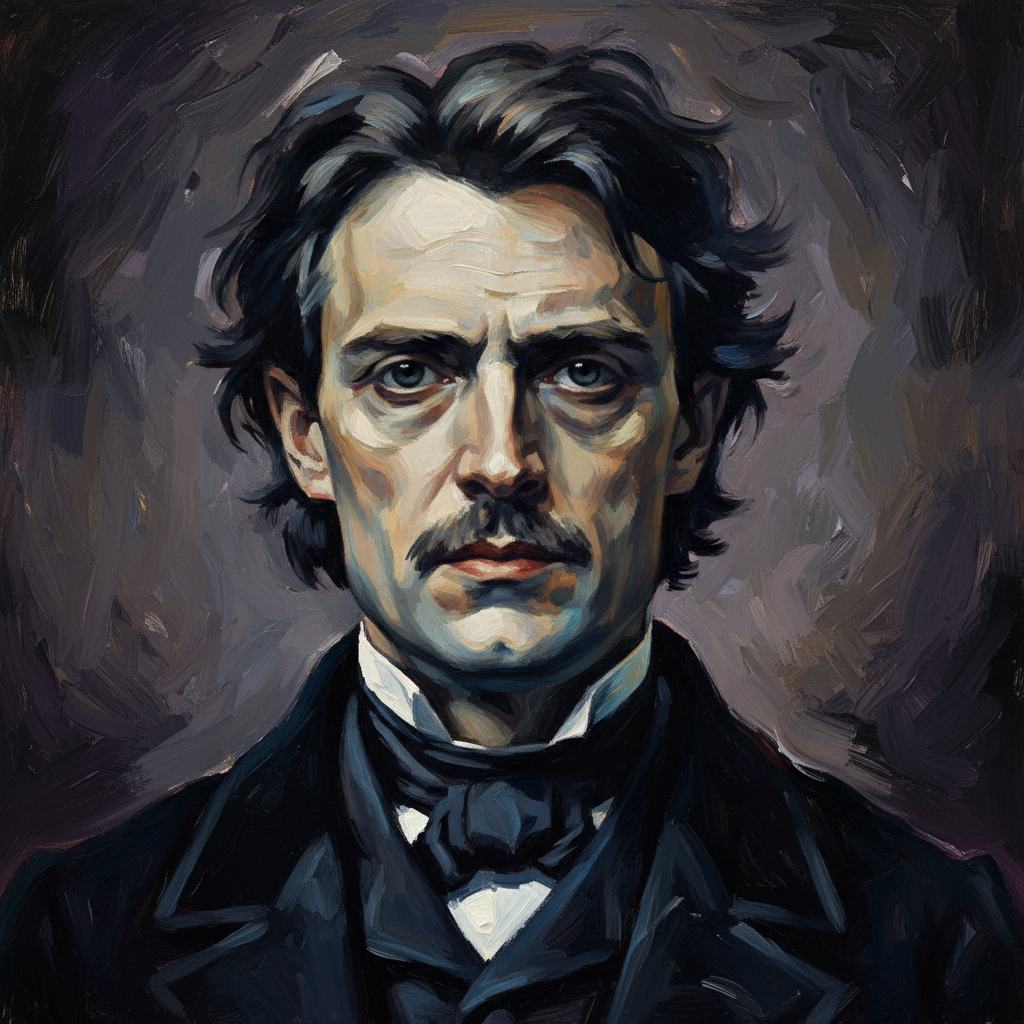
Edgar Allan Poe — "That man is a fool who cannot be a knave when he pleases."
That man is a fool who cannot be a knave when he pleases.
That man is a fool who cannot be a knave when he pleases.
Click any product to generate a realistic preview. Up to 3 at a time.
* Initial load can take up to 90 seconds — revising the preview in another color is nearly instant.
"He knew that Hop-Frog was not fond of wine; for it excited the poor cripple almost to madness; and madness is no comfortable feeling."
"I have no faith in human perfectibility. I think that human exertion will have no appreciable effect upon humanity. Man is now only more active - not more happy - nor more wise, than he was 6000 years…"
"The value of a conundrum is in exact proportion to the extent of its demerit, and that it is only positively good when it is outrageously and scandalously absurd."
"I have no faith in human perfectibility. I think that human progress is an illusion, that man is not an animal that can be perfected, but an animal that can be improved."
"I am a man of the world, and have seen much of its evil. I have also seen something of its good. But I have never seen anything so good as a good wife."
American Gothic poet and short-story writer who invented the detective story (Murders in the Rue Morgue) and shaped horror literature. Closely associated with Nathaniel Hawthorne (fellow American Gothic) and Charles Baudelaire (his French translator and torch-bearer). For an intellectual contrast, see Ralph Waldo Emerson, Transcendentalist optimist of self-reliance — Poe wrote essays attacking the entire Transcendentalist circle as didactic and intellectually thin — he derisively called them 'Frogpondians' and treated their cheerful mysticism as the literary opposite of his macabre realism.
Attributed, but precise source is debated. Often cited as from a critical essay or letter.
Date: Undated
GeneralFound in 1 providers: grok
1 source checked
Your cart is empty