What it means
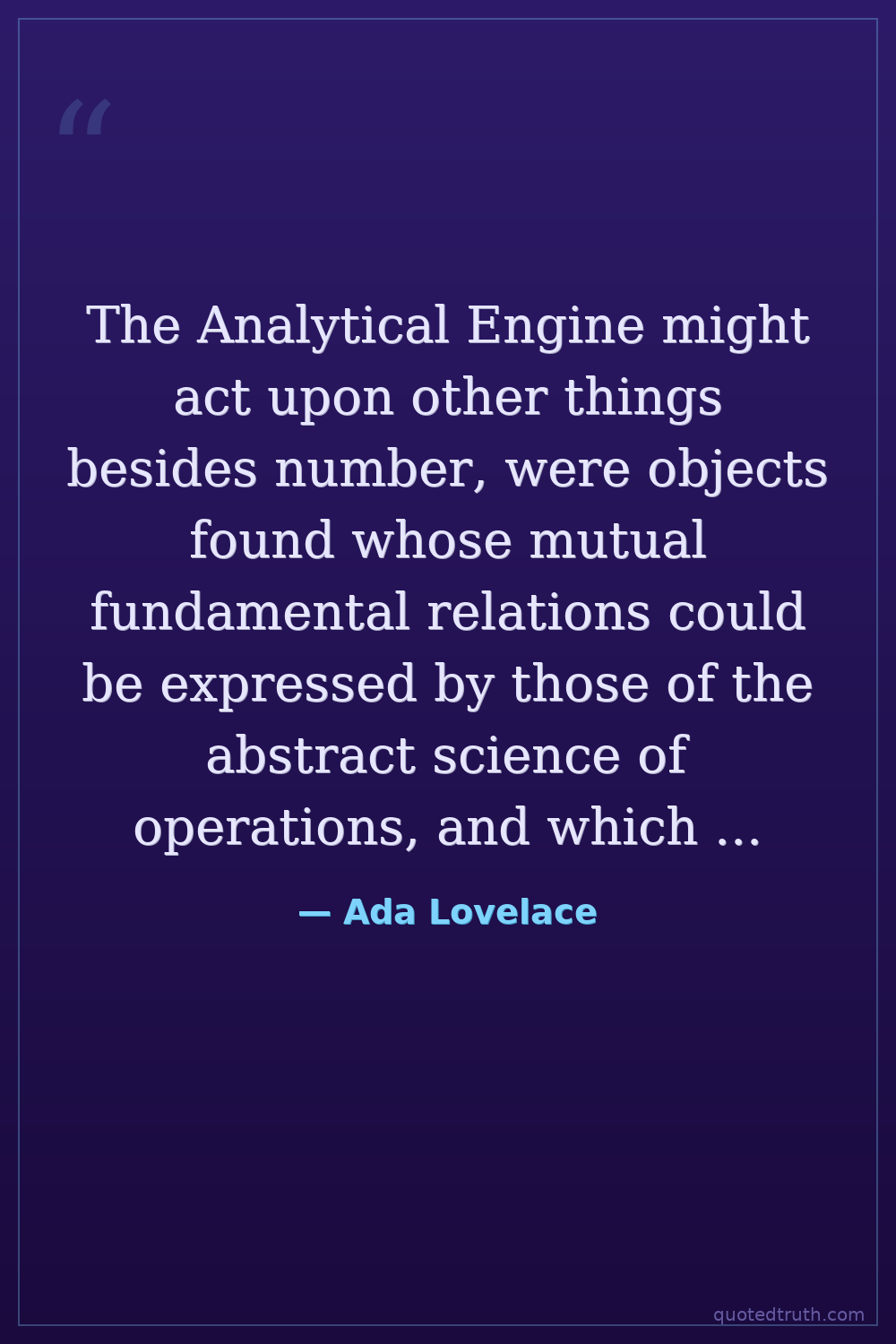
The Analytical Engine's potential extends beyond arithmetic. If any set of objects has relationships expressible through abstract operations—just as numbers relate to each other—the engine could process them. It is not a number-cruncher but a general symbol manipulator. This describes what we now call universal computation: given the right encoding, the machine could operate on music, language, or logic—anything reducible to formal relationships between elements.
Relevance to Ada Lovelace
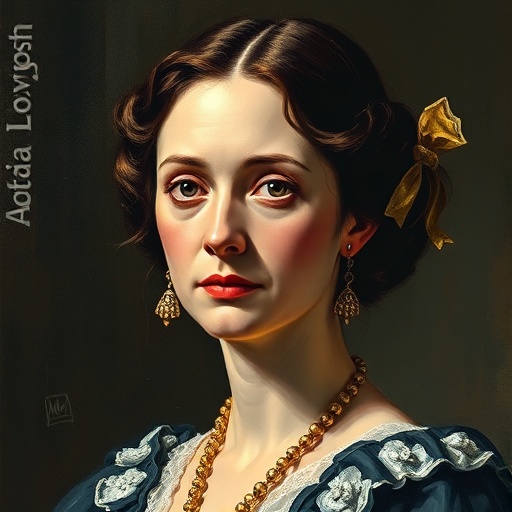
Lovelace (1815–1852), daughter of poet Byron and mathematician Annabella Milbanke, called herself a poetical scientist. While translating Menabrea's description of Babbage's engine, she added notes triple the original length—including the first published algorithm. She explicitly imagined the engine composing music. This quote embodies her singular gift: mathematical precision married to imaginative scope, letting her see in a mechanical calculator something its own inventor never fully articulated—a general-purpose reasoning machine.
The era
Written in 1843 at the height of the Industrial Revolution, when machines were steam-powered laborers and computing meant human clerks performing arithmetic. Babbage's Analytical Engine existed only in blueprints, never built. Boolean algebra was four years away (Boole, 1847); formal logic remained undeveloped. Machines were understood as fixed-task devices. Lovelace's claim that one machine could process any formally defined domain preceded any engineering framework capable of realizing it by a full century.
AI-generated insights based on extensive research and information for context. Factual errors? Email [email protected].