What it means
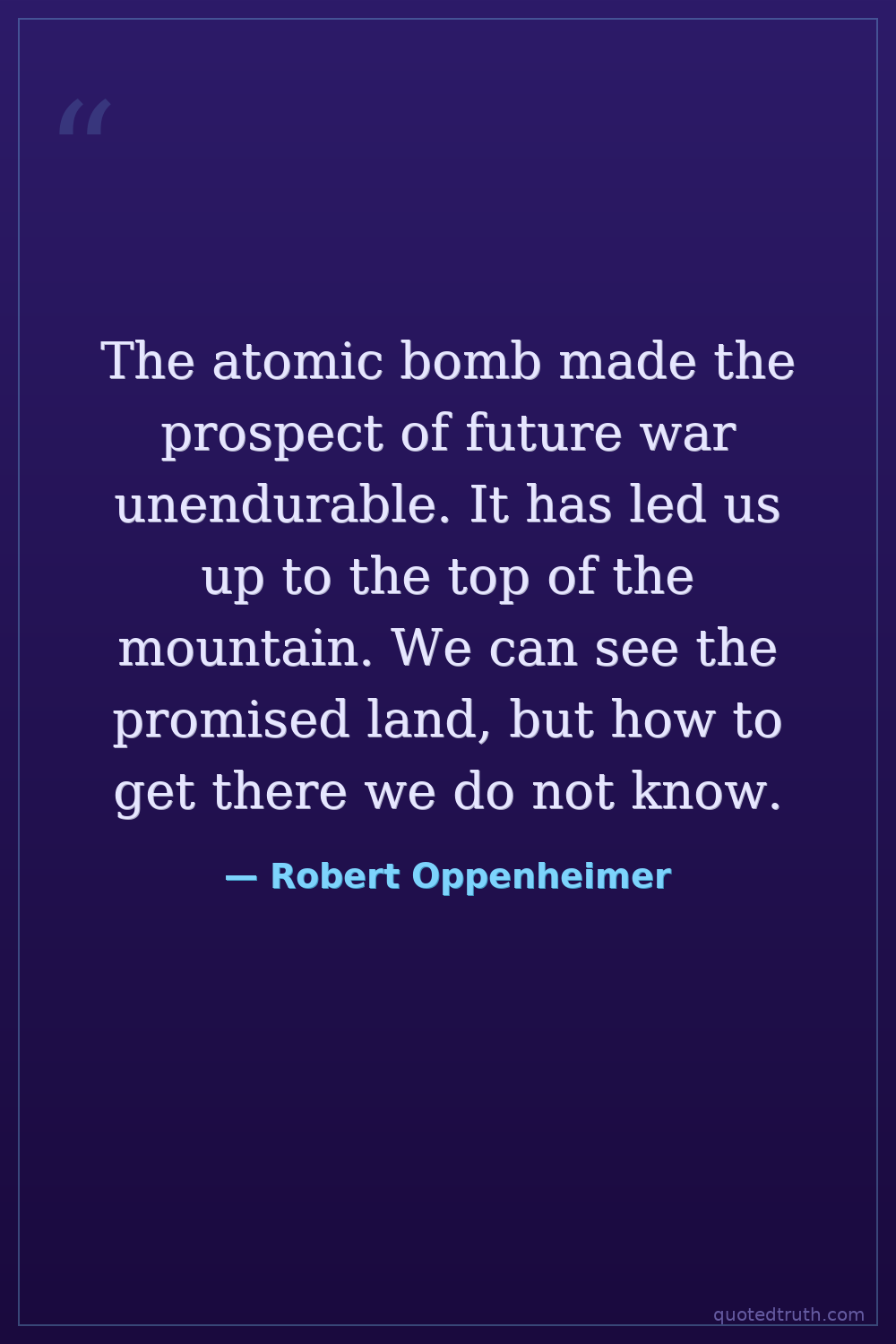
Nuclear weapons made traditional warfare so catastrophically destructive that continuing to wage wars the old way became morally and practically impossible. Humanity can now glimpse a world without major war — a kind of promised land — but lacks the political, diplomatic, and moral frameworks to actually reach that peaceful future. The gap between seeing the goal and achieving it remains the central challenge.
Relevance to Robert Oppenheimer
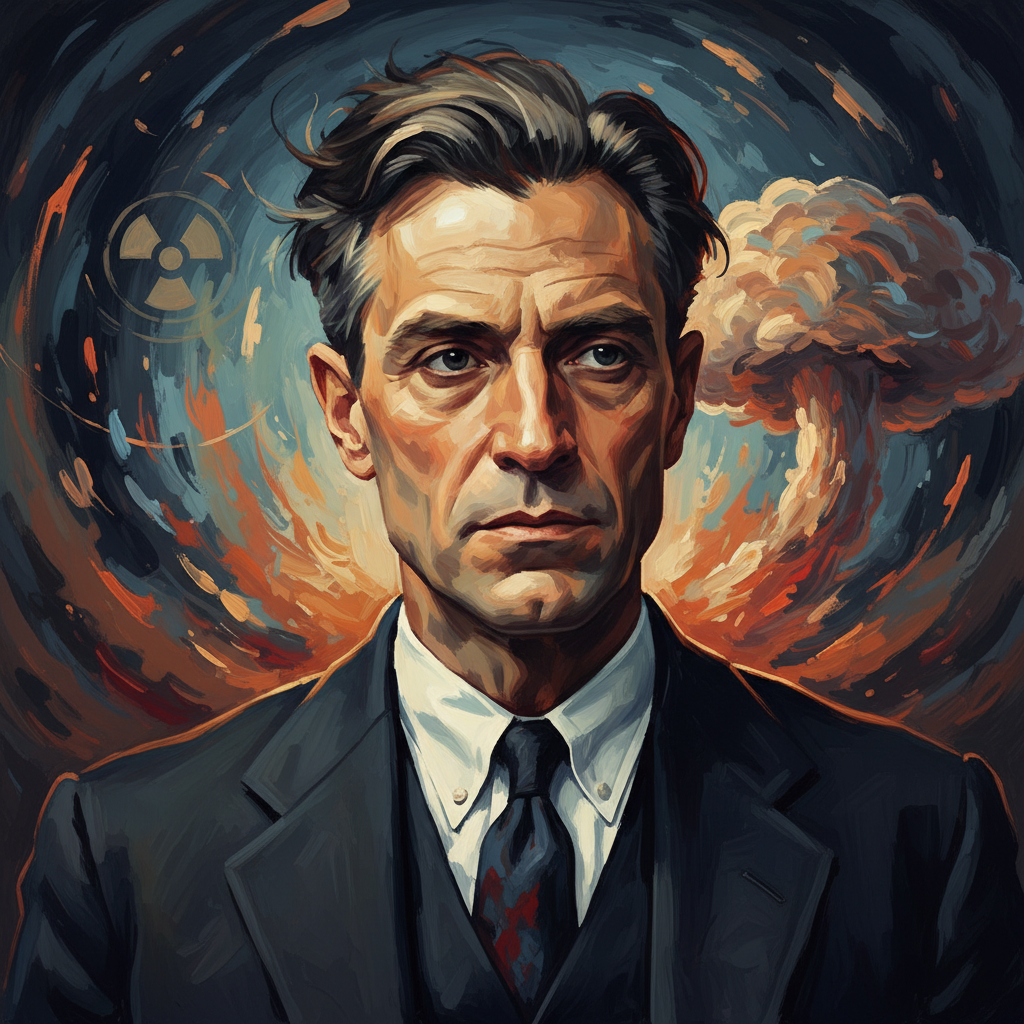
Oppenheimer directed Los Alamos and witnessed Trinity's first detonation in 1945, reportedly quoting the Bhagavad Gita: 'Now I am become Death.' He spent his post-war years advocating for international nuclear control through the Acheson-Lilienthal Report, believing scientists bore moral responsibility for their creations. The AEC stripped his security clearance in 1954, partly for opposing the hydrogen bomb — the promised land receding further.
The era
The late 1940s and early 1950s saw the Cold War harden: the Soviet Union tested its bomb in 1949, NATO formed, Korea erupted in 1950. The UN Atomic Energy Commission collapsed without agreement. Americans practiced duck-and-cover drills. Humanity possessed apocalyptic power yet had no functional international authority to govern it — exactly the chasm Oppenheimer described between visible salvation and attainable reality.
AI-generated insights based on extensive research and information for context. Factual errors? Email [email protected].