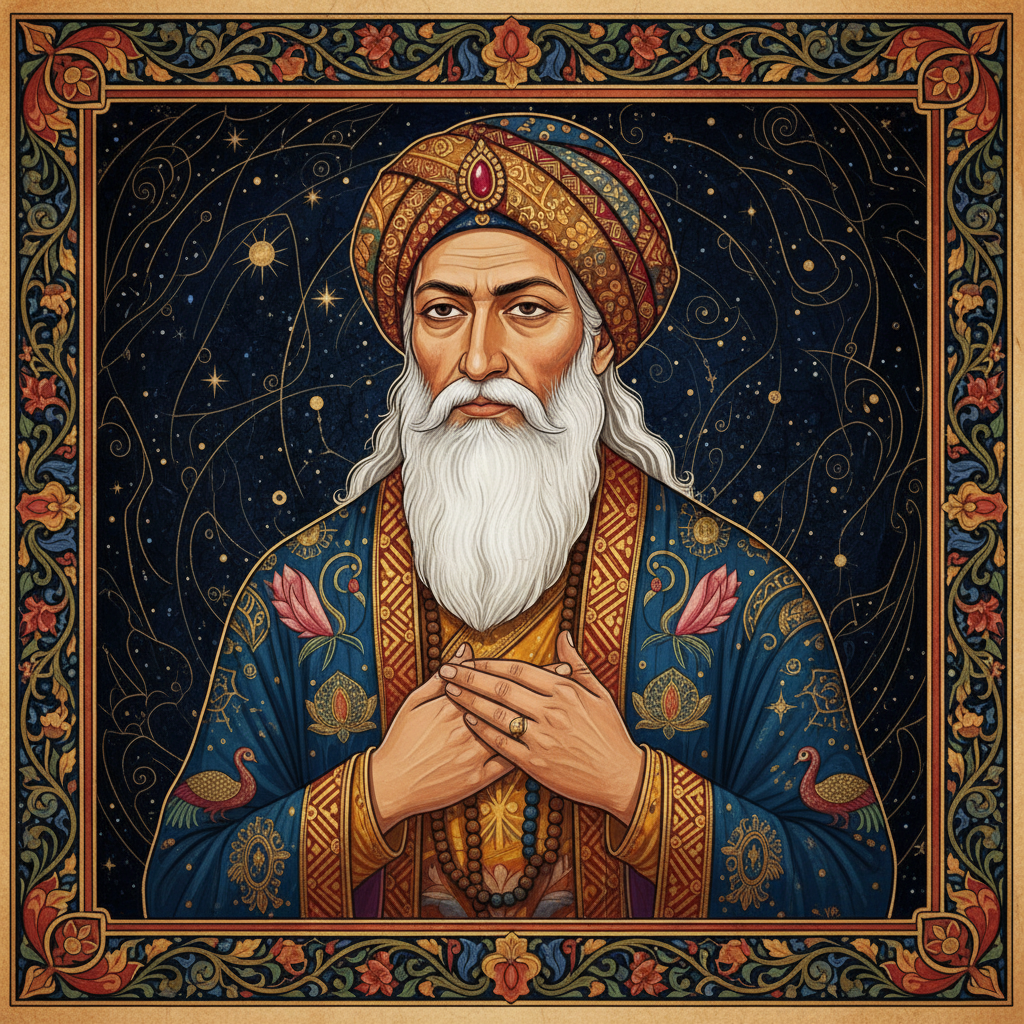
Kabir — "The beloved is hidden where you refuse to look: in yourself."
The beloved is hidden where you refuse to look: in yourself.
The beloved is hidden where you refuse to look: in yourself.
Click any product to generate a realistic preview. Up to 3 at a time.
* Initial load can take up to 90 seconds — revising the preview in another color is nearly instant.
"The snake has poison, but it does not bite itself. The human has anger, but it bites himself."
"The river that flows in you also flows in me."
"Are you looking for me? I am in the next seat. My shoulder is against yours."
"The devotee is a cow, and the Guru is a herdsman; the milk is the nectar of devotion, and the churner is the contemplation of God."
"Oh, how may I ever express that secret word? O how can I say He is not like this, and He is like that? If I say that He is within me, the universe is ashamed: If I say that He is without me, it is fal…"
Indian mystic poet whose verses (preserved in the Sikh Guru Granth Sahib and the Hindu Bhakti tradition) attacked both Hindu and Islamic orthodoxy. Closely associated with Guru Nanak (founder of Sikhism, who incorporated Kabir's verses). For an intellectual contrast, see Brahmanical priesthood, the ritualistic Hindu establishment of his era — Kabir's poetry is the founding text of bhakti devotional rebellion against ritualistic Hinduism — his verses ridicule caste, ritual purity, and priestly mediation as religious theatre.
The divine is within, often overlooked, from his poetry (Dohas).
Date: 15th Century
Love & RelationshipsFound in 1 providers: gemini
1 source checked
Your cart is empty