What it means
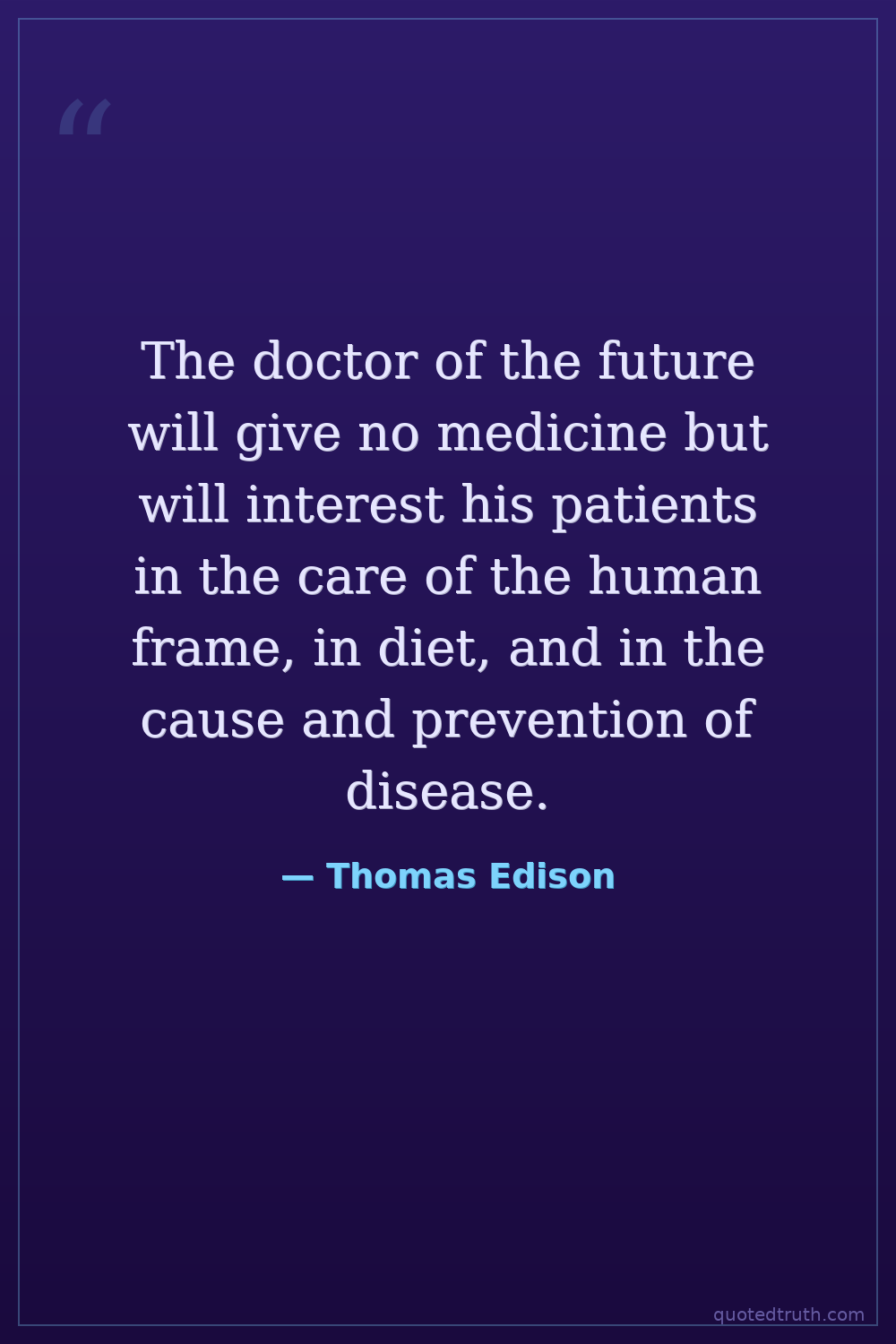
Future doctors won't primarily dispense pills — they'll teach patients how to maintain their own bodies through movement, proper nutrition, and understanding what causes disease in the first place. Prevention beats cure. This is a call to shift medicine from a reactive, drug-centered model to a proactive, education-driven one where the patient is an informed participant in their own health — what we now call preventive and lifestyle medicine.
Relevance to Thomas Edison
Edison was an obsessive empiricist who distrusted convention and tested everything himself. He was health-conscious throughout his life — eating sparingly, experimenting with vegetarianism, and studying nutrition closely. As someone who optimized complex systems for a living, he applied the same engineering logic to the human body: study the inputs, fix the root cause, don't merely mask symptoms. His collaboration with Ford and Firestone on nature-centered retreats reflected this same philosophy.
The era
Edison's era saw medicine in chaotic transition. Patent medicines and opioid tonics were sold openly while germ theory from Pasteur and Koch had only recently been accepted. The Pure Food and Drug Act passed in 1906. Progressive reformers pushed public sanitation, dietary education, and temperance. Figures like John Harvey Kellogg ran sanitariums promoting diet-based healing. Edison's prediction aligned with this reform wave, anticipating a science-grounded preventive approach that would eventually displace the era's widespread snake-oil culture.
AI-generated insights based on extensive research and information for context. Factual errors? Email [email protected].