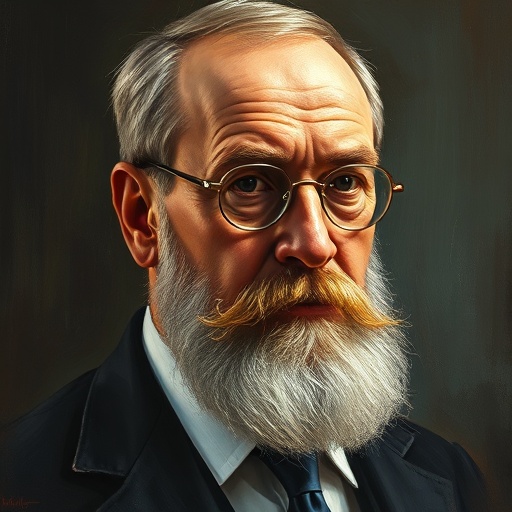
Robert Koch — "The establishment of institutes for infectious diseases is vital for research an…"
The establishment of institutes for infectious diseases is vital for research and treatment.
The establishment of institutes for infectious diseases is vital for research and treatment.
Click any product to generate a realistic preview. Up to 3 at a time.
* Initial load can take up to 90 seconds — revising the preview in another color is nearly instant.
"The scientific method is the only reliable path to knowledge."
"The fight against infectious diseases is a global concern."
"The fight against disease requires international cooperation."
"The study of bacteria has opened up a new world of knowledge, and it is a world full of wonders."
"If my work has any value, it lies in the method, not in the result."
Found in 1 providers: grok
1 source checked
Specialized institutions dedicated to infectious diseases are necessary — not just one-off investigations, but permanent centers with the staff, equipment, and focus to systematically study how pathogens spread, how they infect, and how to stop them. General hospitals and universities can't give infectious disease the sustained attention it demands. Dedicated institutes concentrate expertise, enable long-term research programs, and create clinical capacity to treat outbreaks as they emerge.
Koch didn't just theorize — he built institutions. In 1891, he founded and directed Berlin's Royal Prussian Institute for Infectious Diseases, now called the Robert Koch Institute. His identification of the tuberculosis bacillus (1882) and cholera vibrio (1883) required methodical laboratory work possible only in dedicated facilities. Koch trained generations of bacteriologists there, demonstrating that permanent research institutes amplify discoveries far beyond what any individual scientist could achieve working alone.
In Koch's era, tuberculosis killed roughly one in seven Europeans, cholera swept through cities in recurring waves, and typhoid was endemic in urban slums. Germ theory was overturning centuries of miasma doctrine, but medical infrastructure hadn't caught up. No dedicated national public health agencies existed. Koch's push for institutes helped spark disease-control bodies across Europe and directly shaped the institutional model later adopted by organizations like the U.S. Public Health Service.
AI-generated insights based on extensive research and information for context. Factual errors? Email [email protected].
Your cart is empty