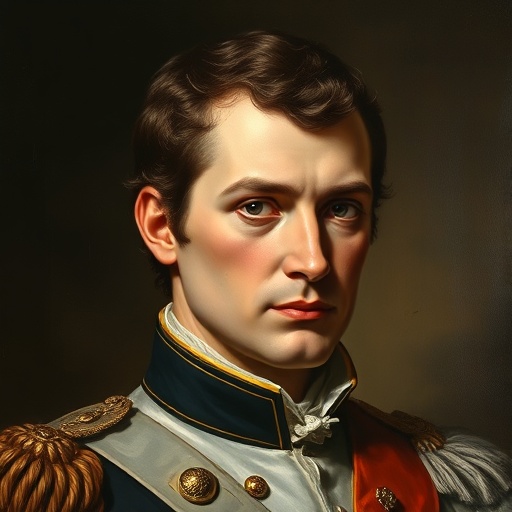
Napoleon Bonaparte — "The greater the man, the less he is subject to fortune; he depends on himself an…"
The greater the man, the less he is subject to fortune; he depends on himself and his own resources.
The greater the man, the less he is subject to fortune; he depends on himself and his own resources.
Click any product to generate a realistic preview. Up to 3 at a time.
* Initial load can take up to 90 seconds — revising the preview in another color is nearly instant.
"The people to whom I have done the most good are those who complain the most of me."
"It is not what is true that counts, but what is thought to be true."
"If a woman abandoned her marital home, how can we compel her to reintegrate it?"
"Give me enough medals and I'll win you any war."
"The Austrians are like babies; they always cry after they have been beaten."
French military leader who crowned himself Emperor in 1804, conquered most of continental Europe, and was finally defeated at Waterloo (1815) before exile to Saint Helena. Closely associated with Charles-Maurice de Talleyrand (his foreign minister, then his betrayer). For an intellectual contrast, see Duke of Wellington, British general and later Prime Minister — Wellington's Peninsular and Waterloo campaigns finally defeated Napoleon. The two never met but their generalships are the canonical opposed European military traditions — Napoleon's offensive-genius mass-conscription model and Wellington's defensive-discipline reverse-slope tactics are the textbook 'French Revolutionary vs British line' military pairing.
Your cart is empty