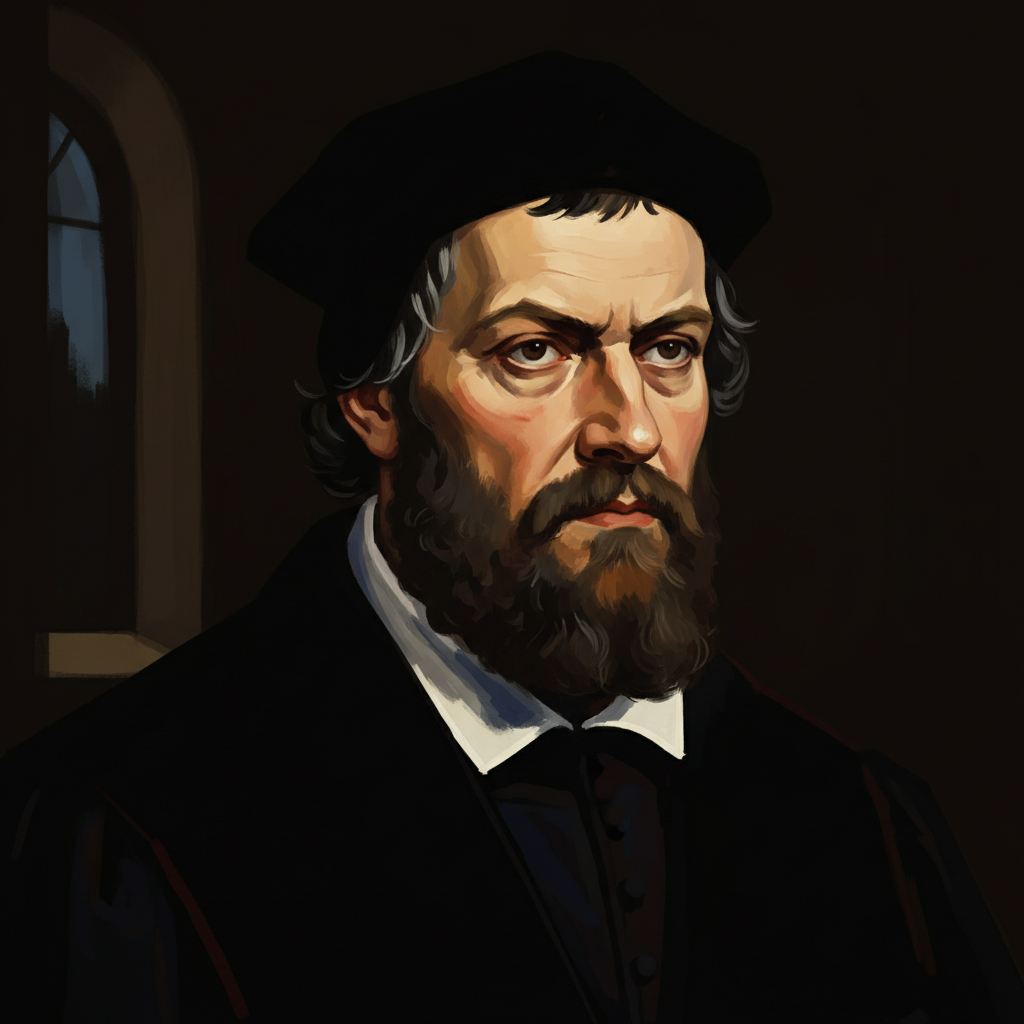
Martin Luther — "The greatest blessing of all is to have a good wife."
The greatest blessing of all is to have a good wife.
The greatest blessing of all is to have a good wife.
Click any product to generate a realistic preview. Up to 3 at a time.
* Initial load can take up to 90 seconds — revising the preview in another color is nearly instant.
"The best way to worship God is to do your ordinary work well."
"God does not need our good works, but our neighbor does."
"No other sin exists in the world save unbelief."
"I am a peasant's son; my father, grandfather, and great-grandfather were genuine peasants. So I am a peasant and shall remain one."
"The world is a great privy and I am a stool."
German theologian whose 95 Theses (1517) launched the Protestant Reformation and broke the Catholic Church's monopoly on Western Christianity. Closely associated with Philipp Melanchthon (Lutheran systematizer) and John Calvin (later Reformer who built on Luther's break). For an intellectual contrast, see Pope Leo X, Renaissance pope (1513-1521) — Leo X's indulgence sales triggered Luther's break and Leo excommunicated him in 1521 — Luther's entire Reformation is structured as a direct answer to the indulgence-funded Vatican Leo represented.
Found in 1 providers: grok
1 source checked
A loving, supportive spouse outranks every other form of good fortune you could receive. Wealth, status, and health all matter, but none of them compares to sharing daily life with a partner who genuinely cares for you. The quote argues that marriage to the right person is the foundational gift that makes everything else bearable and meaningful, turning an ordinary household into a source of lasting happiness.
Luther famously broke with centuries of Catholic teaching on clerical celibacy by marrying Katharina von Bora, a former nun, in 1525. Their marriage became a public model for Protestant pastors and a personal source of stability during years of political danger and illness. Katharina managed the Wittenberg household, brewed beer, farmed, and raised six children, and Luther repeatedly praised her intelligence and partnership in letters and table talks.
In early-modern 16th-century Europe, Catholic priests, monks, and nuns were bound to lifelong celibacy, and marriage was ranked spiritually below monastic life. The Reformation overturned this hierarchy, declaring marriage a holy calling equal to or above the cloister. Luther's open celebration of his own wife was theological propaganda as much as sentiment, helping normalize clerical marriage across newly Protestant territories and reshape European family life for centuries afterward.
AI-generated insights based on extensive research and information for context. Factual errors? Email [email protected].
Your cart is empty