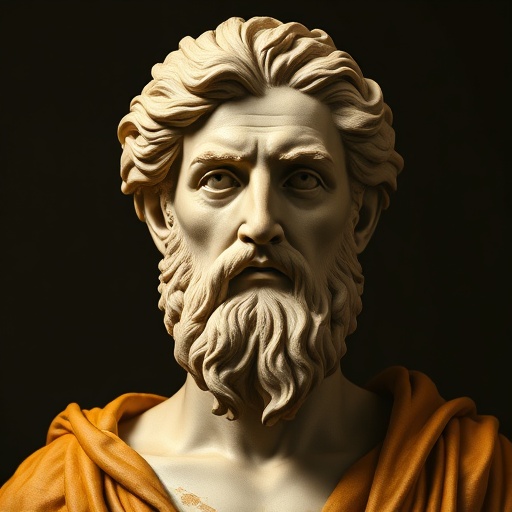
Archimedes — "The greatest pleasure is to discover."
The greatest pleasure is to discover.
The greatest pleasure is to discover.
Click any product to generate a realistic preview. Up to 3 at a time.
* Initial load can take up to 90 seconds — revising the preview in another color is nearly instant.
"Eureka! Eureka!"
"I have discovered a method by which any given solid may be weighed in water."
"Noli turbare circulos meos."
"The method of exhaustion is a powerful tool."
"Do not disturb my circles!"
Found in 1 providers: grok
1 source checked
Finding something new — a hidden pattern, an unexpected answer, a truth you didn't know yesterday — is the deepest satisfaction a person can feel. This quote argues that discovery itself, not its rewards or applications, is what fulfills us most. It's not about fame or money but the raw thrill of understanding something previously unknown. Curiosity, and the payoff when it's rewarded, is life's purest pleasure.
Archimedes spent his life chasing answers: calculating pi with geometric precision, discovering the law of buoyancy (reportedly shouting 'Eureka!' and running naked through Syracuse), designing levers, pulleys, and war machines. He was allegedly killed by a Roman soldier while still drawing geometric figures in the sand. His entire biography demonstrates this principle — discovery wasn't just his work, it was his compulsion and the source of his deepest joy.
Archimedes lived in 3rd-century BCE Syracuse during the Hellenistic era, when Greek intellectual culture was at its peak. Alexandria's great Library thrived, and natural philosophy — studying the world through reason alone — was the highest calling. Mathematics and geometry were paths to cosmic truth. There were no institutional barriers to inquiry; brilliant men were celebrated for uncovering nature's secrets. Discovery was not just valued — it marked civilization's finest minds.
AI-generated insights based on extensive research and information for context. Factual errors? Email [email protected].
Your cart is empty