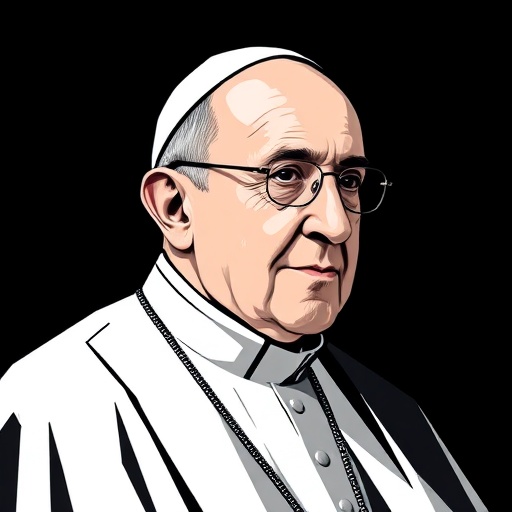
Pope Francis — "The Lord asks us to be shepherds, not to be sheep dogs, but shepherds."
The Lord asks us to be shepherds, not to be sheep dogs, but shepherds.
The Lord asks us to be shepherds, not to be sheep dogs, but shepherds.
Click any product to generate a realistic preview. Up to 3 at a time.
* Initial load can take up to 90 seconds — revising the preview in another color is nearly instant.
"I am a disaster, but I am a disaster that asks for help."
"The worship of the golden calf has returned."
"We have to state, without mincing words, that there is an inseparable bond between our faith and the poor."
"The Church is not an NGO, it is not an organization that has to do things. The Church is the family of God."
"I like to talk to people, to go out into the street. I like to be a street priest."
First Latin American and Jesuit pope (2013-), who has steered the Catholic Church toward pastoral inclusion on LGBTQ pastoral care, divorced Catholics, and climate. Closely associated with Pope John XXIII (the Vatican II reformer pope) and Cardinal Walter Kasper (his theological ally on pastoral reform). For an intellectual contrast, see Cardinal Raymond Burke, American traditionalist cardinal, former head of the Vatican Apostolic Signatura — Burke is the public face of Catholic traditionalism that views Francis's pastoral approach as doctrinally dangerous — he has formally challenged Amoris Laetitia and other Francis reforms.
Found in 1 providers: grok
1 source checked
A shepherd personally guides, protects, and cares for the flock with direct relationship and responsibility. A sheepdog merely herds, drives, and controls through pressure and fear. This distinction calls those in authority to lead through presence, compassion, and genuine concern for individuals rather than through coercion, enforcement, or managing people like obstacles to be directed rather than souls to be nurtured.
Francis, the first Jesuit pope, consistently challenged clericalism and rigid institutional authority. Born Jorge Bergoglio in Buenos Aires, he worked directly with the poor in Villa 21 slums before becoming archbishop. His pastoral style—washing prisoners' feet, visiting refugees, calling priests to smell like their sheep—embodies this exact principle. He repeatedly warned bishops against becoming distant administrators disconnected from ordinary people's struggles.
Francis became pope in 2013 amid widespread clergy abuse scandals, declining church attendance in Western nations, and growing distrust of institutional religion. His era saw populist authoritarian movements globally, where leaders increasingly used fear and control over genuine service. His shepherd metaphor directly countered both clerical careerism within the Church and broader cultural anxieties about leaders who manage rather than genuinely care for those they serve.
AI-generated insights based on extensive research and information for context. Factual errors? Email [email protected].
Your cart is empty