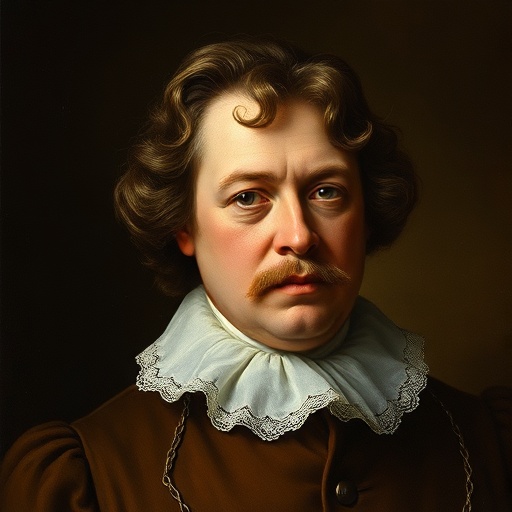
Edward Jenner — "The most difficult task is often the most rewarding."
The most difficult task is often the most rewarding.
The most difficult task is often the most rewarding.
Click any product to generate a realistic preview. Up to 3 at a time.
* Initial load can take up to 90 seconds — revising the preview in another color is nearly instant.
"It is the lot of man to suffer; but it is also his lot to alleviate the sufferings of others."
"The practice of vaccination is now so generally adopted, that it is hardly necessary to recommend it."
"I have often thought that if mankind were more generally enlightened, they would be more virtuous."
"It is a fortunate circumstance, that the Cow Pox is not infectious; for if it were, it would be a source of great alarm."
"The greatest reward for my labours is the satisfaction of having done good to my fellow creatures."
Found in 1 providers: grok
1 source checked
Challenging work pays off in ways easy work never can. When you push through difficulty — the long hours, the setbacks, the uncertainty — the outcome carries deeper satisfaction. It's not suffering for its own sake, but recognizing that meaningful achievements require sustained effort. Tasks that demand the most from you tend to produce results most worth having, both in real-world impact and in personal growth.
Jenner spent decades pursuing a controversial theory — that cowpox exposure could immunize against deadly smallpox. He faced ridicule from the Royal Society, resistance from the medical establishment, and ethical scrutiny for testing on a child. His painstaking observation of milkmaids, rigorous documentation, and persistence despite rejection embody this belief exactly. The reward was immense: vaccination eventually eradicated one of history's deadliest diseases.
Jenner worked during the Enlightenment's peak, when empirical science was slowly overturning centuries of received medical wisdom. Smallpox killed roughly 400,000 Europeans annually and left survivors scarred or blind. Variolation — deliberately infecting patients with live smallpox — existed but carried real mortality risk. Scientific institutions were conservative and skeptical of outsiders. Proposing that animal disease could protect against human illness was radical, making perseverance through difficulty an essential virtue.
AI-generated insights based on extensive research and information for context. Factual errors? Email [email protected].
Your cart is empty