What it means
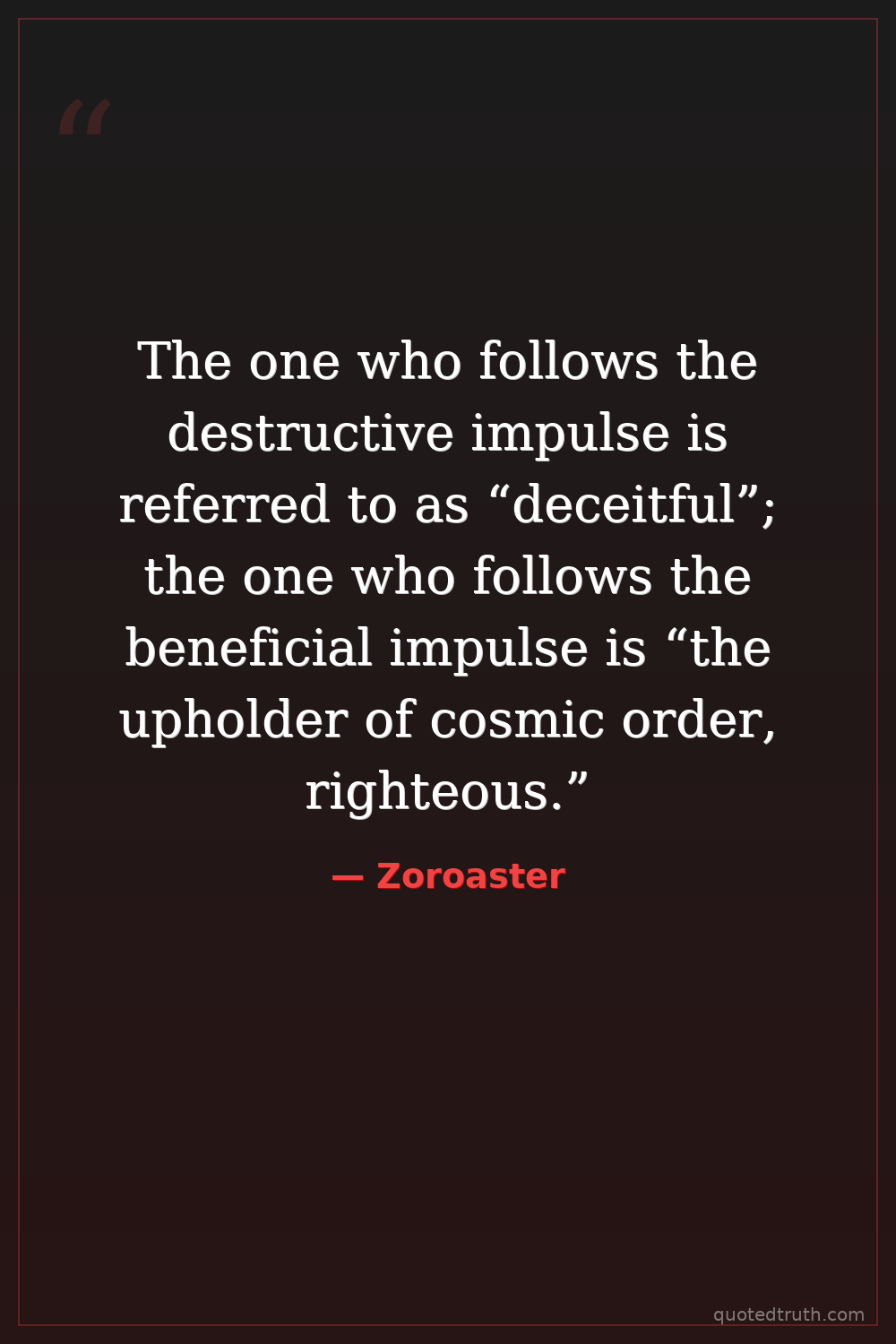
People define themselves by which inner drive they act on. Acting from harmful, selfish, or destructive urges makes a person a liar and a fraud against reality itself. Acting from constructive, truthful, life-affirming urges aligns a person with how the world is actually supposed to work. Character is not declared; it is revealed by which impulse you repeatedly choose to follow in daily decisions.
Relevance to Zoroaster
Zoroaster built his entire religion around this exact binary. As a priest-reformer who claimed direct revelation from Ahura Mazda, he taught that every human chooses between Asha (truth, cosmic order) and Druj (the lie, chaos). Calling followers of harm 'deceitful' reflects his core doctrine that evil is fundamentally a lie against reality, while righteousness means actively upholding the true order of creation.
The era
Zoroaster lived in ancient Iran, likely between 1500–1000 BCE, among Indo-Iranian tribes practicing polytheistic ritual sacrifice and warrior raiding. Surrounding cultures saw gods as amoral powers to appease. Zoroaster's reframing of existence as a moral contest between truth and lie was revolutionary, introducing ethical monotheism, personal accountability, heaven, hell, and final judgment—concepts that later shaped Judaism, Christianity, and Islam through Persian imperial contact.
AI-generated insights based on extensive research and information for context. Factual errors? Email [email protected].