Tim Berners-Lee — "The original idea of the web was that it should be a collaborative space where y…"

The original idea of the web was that it should be a collaborative space where you can communicate and share knowledge. It wasn't meant to be a read-only medium. It was meant to be a read-write medium.
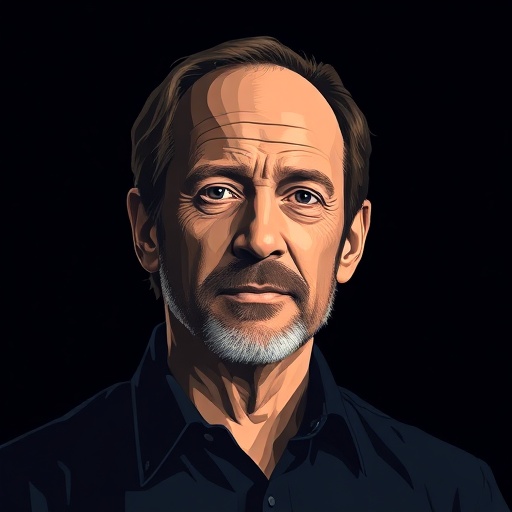
Tim Berners-Lee — Tim Berners-Lee Contemporary · Inventor of the World Wide Web

Get This Quote & Author's Image Illustrated On:

Click any product to generate a realistic preview. Up to 3 at a time.
* Initial load can take up to 90 seconds — revising the preview in another color is nearly instant.

Kitchen

Apparel

Other

About Tim Berners-Lee (born 1955)

British computer scientist who invented the World Wide Web at CERN in 1989 and founded the W3C, championing open web standards. Closely associated with Vint Cerf (TCP/IP co-creator and 'father of the internet') and Marc Andreessen (Mosaic browser creator and Netscape co-founder). For an intellectual contrast, see Mark Zuckerberg, Facebook (Meta) founder — Zuckerberg's walled-garden Facebook is the canonical contemporary opposite of Berners-Lee's open-web vision; Berners-Lee's Solid project and 'recapture the web' essays are explicitly written as a rebuttal to the platform-monopoly model Facebook pioneered.

Details

TED Talk: A Magna Carta for the web

Date: 2014

Educational

Verification

Unverifiable

Found in 1 providers: grok

1 source checked

Understanding this quote

What it means

The web was designed for two-way participation, not passive consumption. Everyone should be able to create and share, not just read what others post. The internet's founding vision was democratic collaboration and mutual knowledge-building, where every user is also a potential contributor, making the web a living, evolving conversation rather than a static broadcast channel.

Relevance to Tim Berners-Lee

Berners-Lee invented the World Wide Web in 1989 at CERN, originally to help scientists share research collaboratively. His first browser was also an editor. He has spent decades through the World Wide Web Consortium and Web Foundation advocating for openness, net neutrality, and decentralization, fighting commercial and governmental forces that reduced the web to passive consumption and surveillance.

The era

Berners-Lee built the web during the early 1990s internet boom, when digital communication was transforming society. By the 2000s, Web 2.0 restored some collaborative vision through wikis and social media, but corporate platforms later recentralized control. His statement resonates amid growing concerns about surveillance capitalism, misinformation, and algorithmic gatekeeping undermining the web's original democratic promise.

AI-generated insights based on extensive research and information for context. Factual errors? Email [email protected].
Your Cart

Your cart is empty