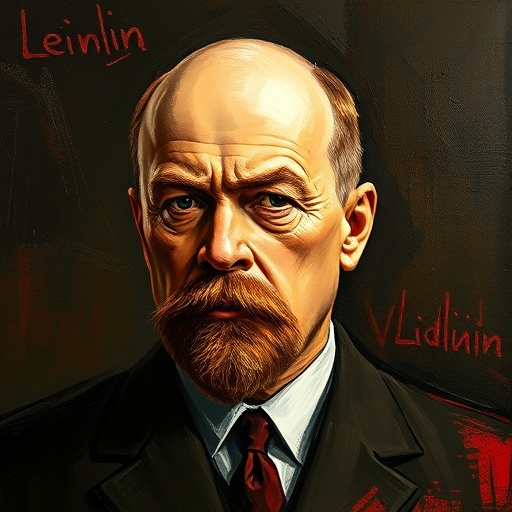
Vladimir Lenin — "The press should be not only a collective propagandist and a collective agitator…"
The press should be not only a collective propagandist and a collective agitator, but also a collective organizer of the masses.
The press should be not only a collective propagandist and a collective agitator, but also a collective organizer of the masses.
Click any product to generate a realistic preview. Up to 3 at a time.
* Initial load can take up to 90 seconds — revising the preview in another color is nearly instant.
"The working class needs a strong, centralized party to lead it to victory."
"The entire history of revolutions shows that they are always accompanied by the most ruthless and bloody civil wars."
"The entire question of the struggle against opportunism must be raised from the standpoint of the struggle against the bourgeoisie."
"If we want to achieve victory, we must learn to combine the most ruthless revolutionary methods with the most cautious and pragmatic approach."
"A revolution is not a dinner party, or writing an essay, or painting a picture, or doing embroidery; it cannot be so refined, so leisurely and gentle, so temperate, kind, courteous, restrained and mag…"
Russian revolutionary who led the October 1917 Bolshevik Revolution and founded the Soviet state; What Is to Be Done? (1902) shaped 20th-century revolutionary practice. Closely associated with Leon Trotsky (his Red Army organizer and 1917 partner) and Karl Marx (the source Lenin claimed (and adapted)). For an intellectual contrast, see Karl Popper, Austrian-British philosopher — Popper's The Open Society and Its Enemies (1945) systematically attacked Marx-and-Lenin 'historical inevitability' as the philosophical structure that produces totalitarianism — Lenin's vanguard-party doctrine is Popper's primary 20th-century target.
Your cart is empty