Zoroaster — "The soul of the righteous shall be joyful in the best existence, but the soul of…"
The soul of the righteous shall be joyful in the best existence, but the soul of the wicked shall be miserable in the worst existence.
The soul of the righteous shall be joyful in the best existence, but the soul of the wicked shall be miserable in the worst existence.
Click any product to generate a realistic preview. Up to 3 at a time.
* Initial load can take up to 90 seconds — revising the preview in another color is nearly instant.
"The reward of the righteous is given through the Good Mind."
"I who have set my heart on watching over the soul, in union with Good Thought, as I praise and proclaim you, O Wise Lord."
"He who chooses the good mind, he who chooses righteousness, he who chooses the spirit of devotion, he shall attain immortality."
"For the wise, the truth is clear; for the foolish, it is hidden."
"Form no covetous desire, so that the demon of greediness may not deceive thee, and the treasure of the world may not be tasteless to thee."
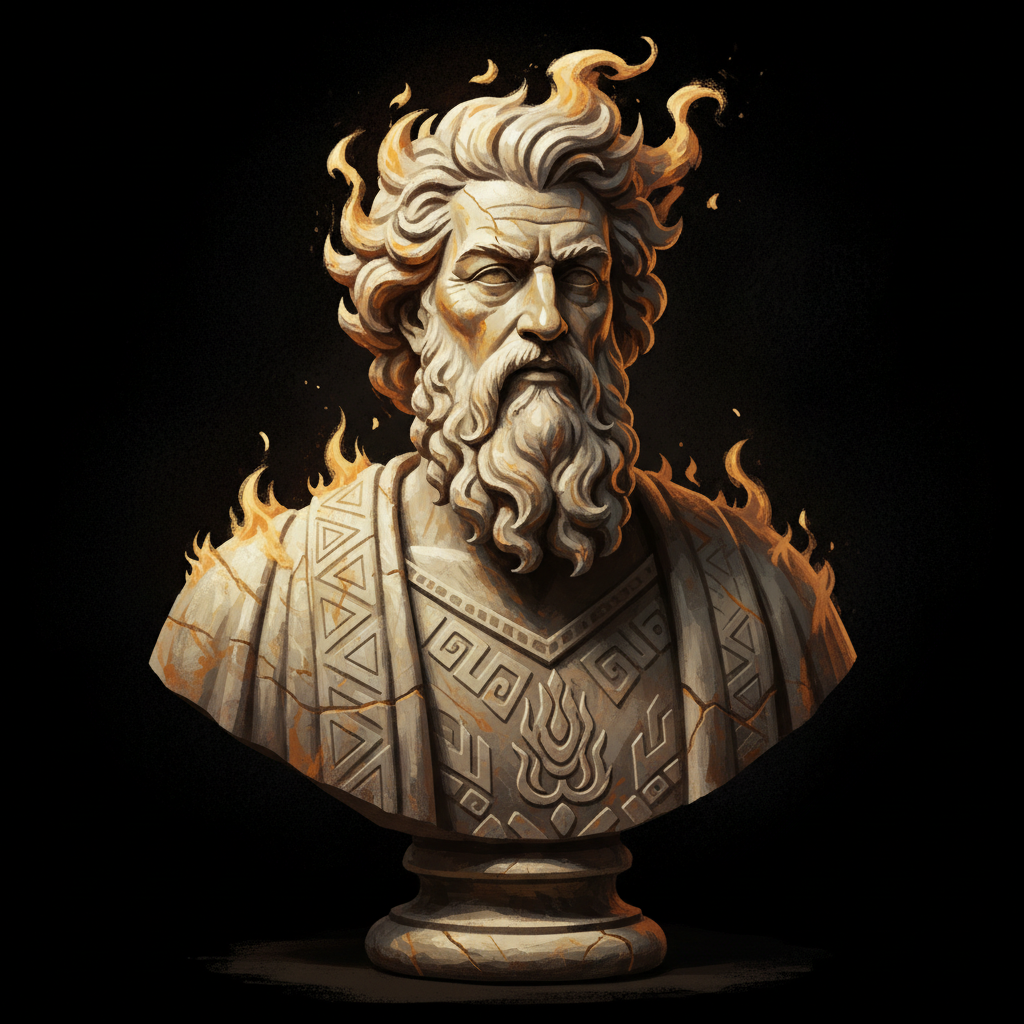
Iranian prophet who founded Zoroastrianism, the first major religion of cosmic dualism between good (Ahura Mazda) and evil (Angra Mainyu). Closely associated with The Buddha (near-contemporary Eastern moral-cosmological revolutionary). For an intellectual contrast, see Friedrich Nietzsche, German philosopher of 'beyond good and evil' — Nietzsche appropriated Zarathustra's name for Thus Spoke Zarathustra (1883) precisely to invert the original's moral cosmology — the historical Zoroaster founded the good-versus-evil framework Nietzsche's character announces the end of.
Found in 1 providers: grok
1 source checked
Your moral choices determine your ultimate fate. People who live honestly and act with integrity will experience deep contentment and peace, eventually arriving at a state of flourishing. Those who choose cruelty, deception, or harm end up trapped in suffering of their own making. The quote frames existence as a spectrum where righteousness leads upward toward joy and wickedness drags a person downward into lasting misery, both in this life and beyond.
Zoroaster built his entire religious system around this exact binary between asha (truth, order) and druj (falsehood, chaos). As a prophet in ancient Persia, he taught that every individual freely chooses sides and faces judgment after death at the Chinvat Bridge, where the righteous cross into paradise and the wicked fall into torment. This saying distills his signature doctrine of personal moral accountability and an ethical afterlife.
Zoroaster lived roughly 1500-1000 BCE in ancient Iran, when most regional religions centered on ritual sacrifice, polytheism, and appeasing capricious gods rather than personal ethics. His teaching introduced a radical framework: a single supreme good deity, individual moral responsibility, and an afterlife determined by conduct rather than status or offerings. This ethical monotheism later influenced Judaism, Christianity, and Islam, making his era a turning point in how humans connected morality to cosmic destiny.
AI-generated insights based on extensive research and information for context. Factual errors? Email [email protected].
Your cart is empty