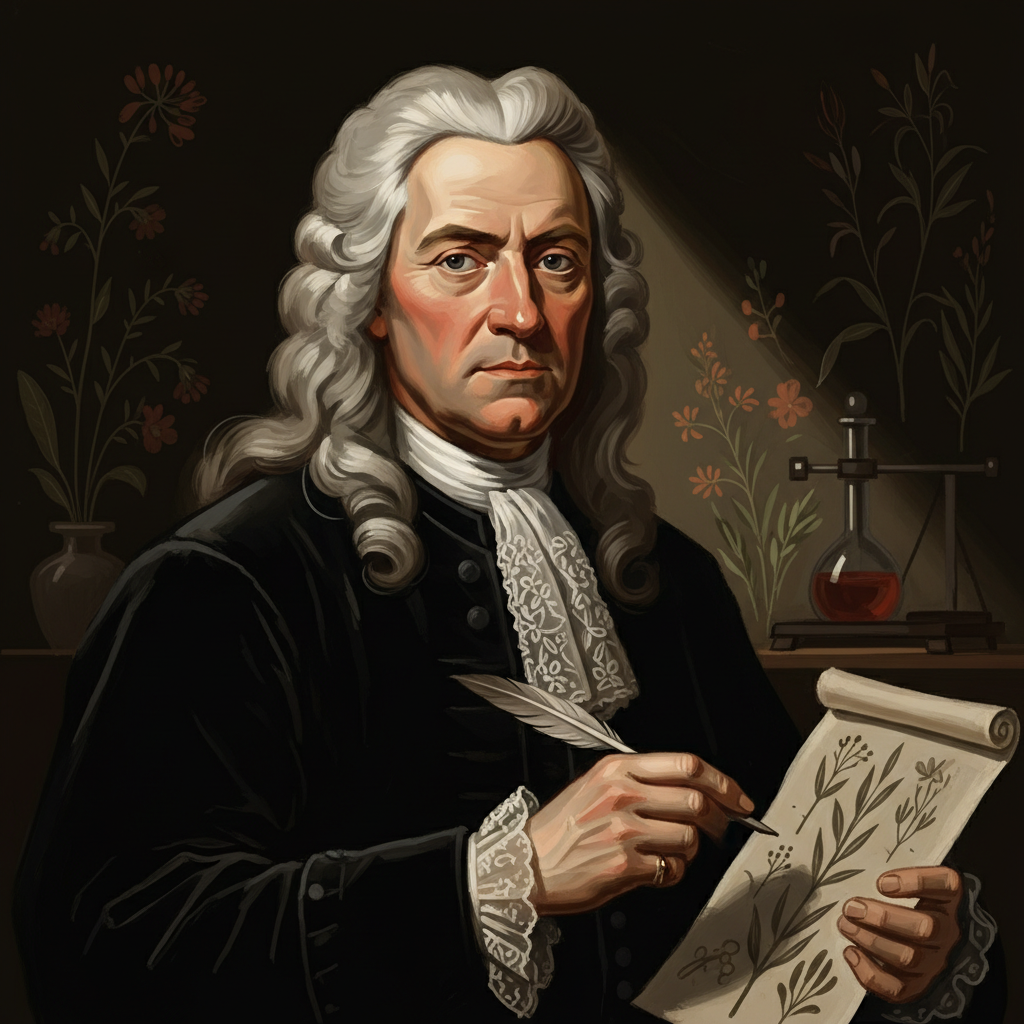
Carl Linnaeus — "The whole system of nature is nothing but a system of sexual generation."
The whole system of nature is nothing but a system of sexual generation.
The whole system of nature is nothing but a system of sexual generation.
Click any product to generate a realistic preview. Up to 3 at a time.
* Initial load can take up to 90 seconds — revising the preview in another color is nearly instant.
"When the spiritual light is concentrated in the brain, everything else must be sinking in the dark."
"The natural system will always remain the greatest goal for botanists."
"The world is full of wonders, but man is the greatest wonder of all."
"The species are as numerous as the different forms which the Infinite Being produced in the beginning."
"Homo Sapiens. Diurnus; varians cultura, loco. Europaeus albus, Asiaticus luridus, Africanus niger, Americanus rufus."
Swedish botanist and the father of modern taxonomy whose Systema Naturae (1735) introduced binomial nomenclature for naming all species. Closely associated with Joseph Banks (British naturalist who carried Linnaean classification on Cook's voyages). For an intellectual contrast, see Comte de Buffon, French naturalist and Histoire Naturelle author (1749-1788) — Buffon explicitly attacked Linnaean fixed-categories taxonomy as artificial and rejected the binomial system; his gradualist, environment-shaped natural history was the explicit alternative. Anticipates the fixed-species-vs-evolution debate Darwin would later resolve.
A bold and controversial statement reflecting his emphasis on sexual reproduction in plant classification.
Date: c. 1735
Nature & WorldFound in 1 providers: gemini
1 source checked
All of nature's organization and diversity ultimately traces back to reproduction. Living things are not random—they exist within structured lineages defined by how they reproduce and pass traits to offspring. Understanding sexuality and reproduction is therefore the master key to understanding every organism's place in the natural world.
Linnaeus built his entire taxonomic system—Species Plantarum, Systema Naturae—around reproductive structures, particularly flower parts in plants. He classified plants by stamens and pistils, scandalizing contemporaries who found sexual metaphors in botany indecent. For Linnaeus, reproduction was not incidental but constitutive of natural order, reflecting his lifelong conviction that species boundaries are defined through generational continuity.
In 18th-century Europe, natural philosophy was shifting from theological cataloguing toward empirical classification. Linnaeus worked amid Enlightenment drives to systematize all knowledge rationally. His sexual system emerged when reproduction was poorly understood and discussing plant sexuality publicly was considered scandalous. His framework nevertheless dominated biology, bridging earlier medieval natural history and the evolutionary theory that Darwin would later build upon.
AI-generated insights based on extensive research and information for context. Factual errors? Email [email protected].
Your cart is empty