Zoroaster — "The wise man chooses Righteousness, the unwise man chooses the Lie."
The wise man chooses Righteousness, the unwise man chooses the Lie.
The wise man chooses Righteousness, the unwise man chooses the Lie.
Click any product to generate a realistic preview. Up to 3 at a time.
* Initial load can take up to 90 seconds — revising the preview in another color is nearly instant.
"To him who causes pain to the righteous, there shall be pain at the end."
"The Lie-demon shall be smitten, and the Good Mind shall triumph."
"Whoso follows the path of Righteousness, him Ahura Mazda will lead to the best existence."
"He who is righteous, him I shall praise, but him who is wicked, him I shall denounce."
"The purpose of life is to strive for perfection and attain union with Ahura Mazda."
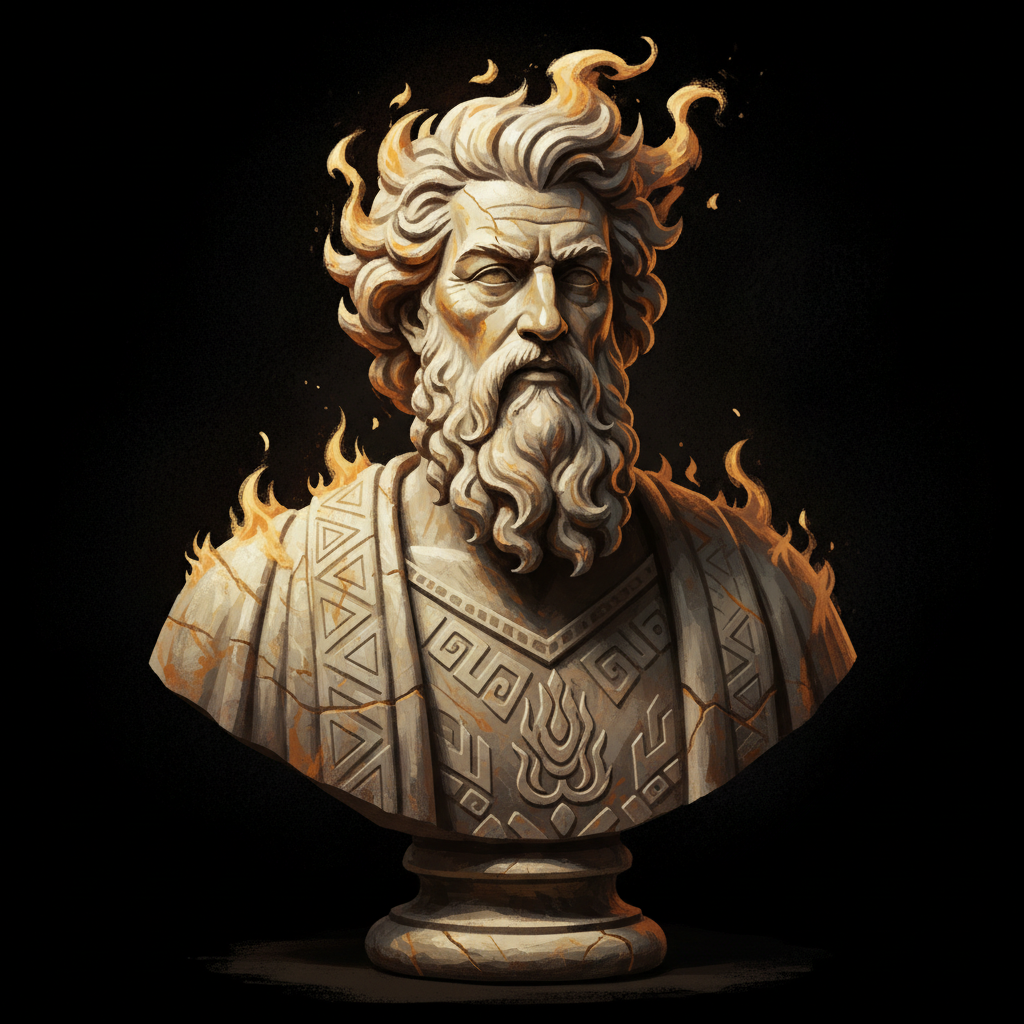
Iranian prophet who founded Zoroastrianism, the first major religion of cosmic dualism between good (Ahura Mazda) and evil (Angra Mainyu). Closely associated with The Buddha (near-contemporary Eastern moral-cosmological revolutionary). For an intellectual contrast, see Friedrich Nietzsche, German philosopher of 'beyond good and evil' — Nietzsche appropriated Zarathustra's name for Thus Spoke Zarathustra (1883) precisely to invert the original's moral cosmology — the historical Zoroaster founded the good-versus-evil framework Nietzsche's character announces the end of.
Found in 1 providers: grok
1 source checked
Every person constantly faces a basic moral choice between truth and deception, justice and harm. Wise people deliberately align themselves with what is right, honest, and constructive, while foolish people give in to dishonesty and corruption. The decision is not forced on anyone; it is made freely, again and again, through everyday actions. Character is built by which side a person keeps choosing.
Zoroaster built his entire religion around this exact binary. He preached Asha, meaning truth and cosmic order, against Druj, the Lie. As a reforming priest who rejected the polytheism of his time, he taught that humans possess free will and must personally side with the wise creator Ahura Mazda. This saying compresses his core ethical message that he spent his life proclaiming.
Zoroaster lived in ancient Iran, likely between 1500 and 1000 BCE, among tribal Indo-Iranian peoples who worshipped many gods through animal sacrifice and ritual intoxication. Cattle raiding, warrior cults, and priestly corruption were common. By framing existence as a moral struggle between truth and falsehood, Zoroaster broke from this ritual-heavy polytheism and introduced one of the earliest ethical monotheisms, later shaping Judaism, Christianity, and Islam.
AI-generated insights based on extensive research and information for context. Factual errors? Email [email protected].
Your cart is empty