Laozi — "The wise man's food is that which nourishes, not that which pleases the eye."
The wise man's food is that which nourishes, not that which pleases the eye.
The wise man's food is that which nourishes, not that which pleases the eye.
Click any product to generate a realistic preview. Up to 3 at a time.
* Initial load can take up to 90 seconds — revising the preview in another color is nearly instant.
"Govern a state by justice, wage war by surprise, and take the world by doing nothing."
"The sage attends to the inner and not to the outer."
"Taking things lightly must lead to big difficulties. The sage regards things as difficult, and thereby avoids difficulty."
"Pursue without interfering."
"The sage attends to the belly, and not to what he sees."
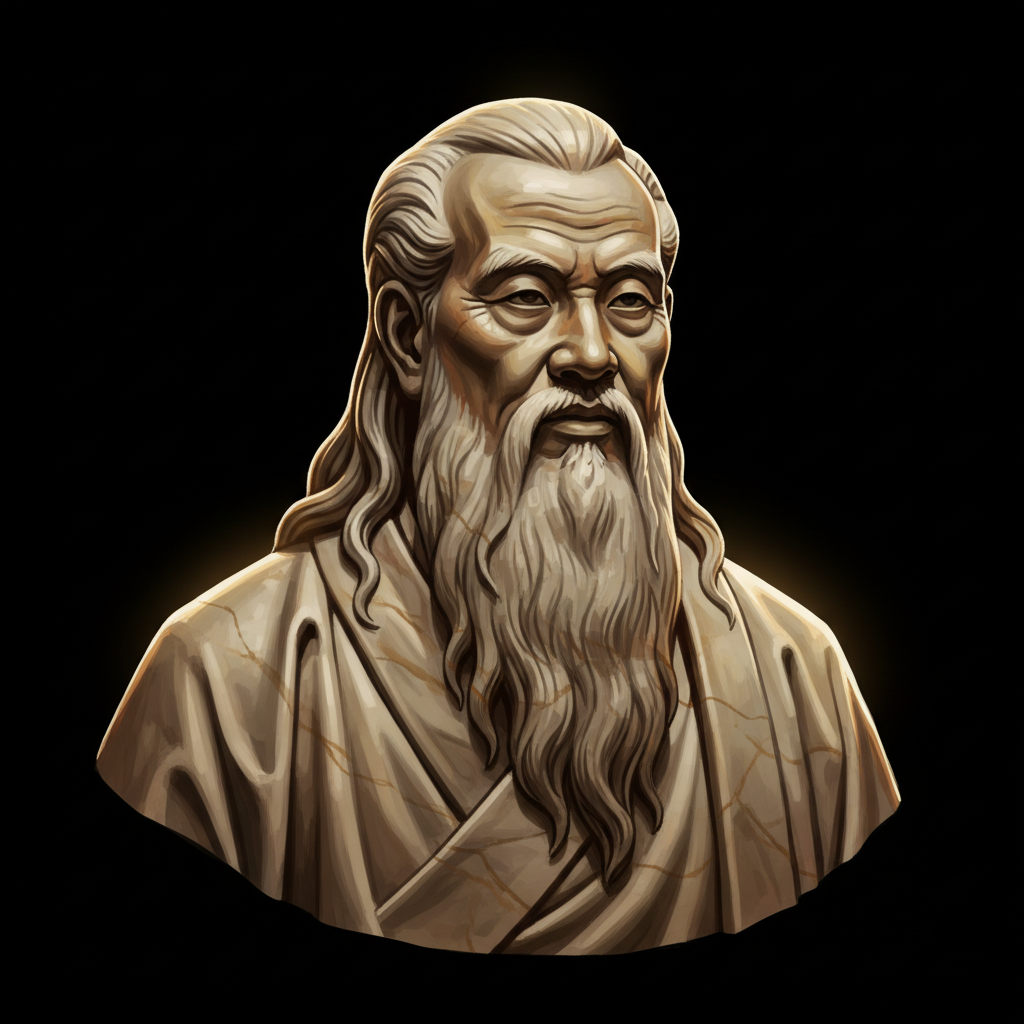
Reputed founder of Taoism and author of the Tao Te Ching, whose wu wei (effortless action) shaped East Asian philosophy. Closely associated with Zhuangzi (later Taoist who extended Laozi's framework). For an intellectual contrast, see Confucius, near-contemporary Chinese sage of social ritual and duty — Confucius systematized social order through ritual and hierarchy; Laozi argued that all such systems were the disease, not the cure — the two founding poles of Chinese moral philosophy.
Tao Te Ching (general sentiment related to simplicity)
Date: 6th century BCE (approximate)
ShockingFound in 1 providers: grok
1 source checked
Choose what actually sustains you over what merely looks appealing. True nourishment comes from substance, not presentation or show. A person guided by wisdom evaluates things by their real effect and usefulness, not by surface charm or aesthetic appeal. Applied broadly, this means preferring genuine value over flashy appearances in food, possessions, relationships, and ideas, since what satisfies the eye often fails to satisfy the deeper needs of body and spirit.
Laozi, the legendary founder of Taoism and reputed author of the Tao Te Ching, championed simplicity, naturalness, and returning to essential things. Tradition describes him as a reclusive court archivist who rejected ornate palace life for quiet contemplation. His teachings repeatedly warn against excess, artifice, and sensory indulgence, urging alignment with the Tao through plain living. This saying mirrors his core doctrine that the unadorned and functional holds more genuine power than decorated surfaces.
Laozi lived during the turbulent late Zhou dynasty (roughly 6th century BCE), an era of collapsing feudal order that preceded the Warring States period. Aristocratic courts flaunted elaborate banquets, ritual vessels, and luxury goods as status symbols while common people suffered famine and conscription. Competing schools like Confucianism emphasized ceremony and hierarchy. Against this backdrop of ostentatious display and political chaos, Laozi's call toward simple nourishment over showy appearance offered a radical critique of elite consumption and aristocratic waste.
AI-generated insights based on extensive research and information for context. Factual errors? Email [email protected].
Your cart is empty