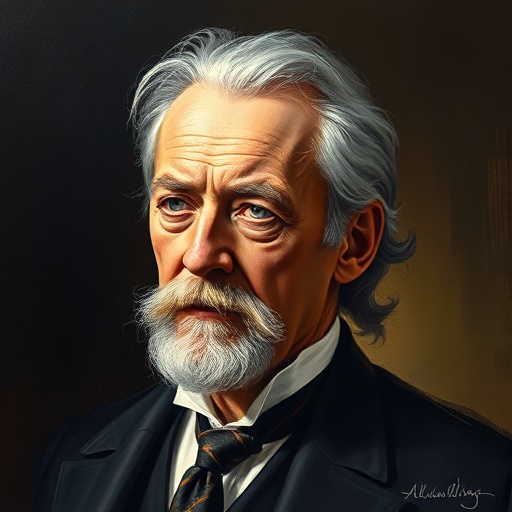
Alexander Fleming — "The world is full of interesting things. You just have to look for them."
The world is full of interesting things. You just have to look for them.
The world is full of interesting things. You just have to look for them.
Click any product to generate a realistic preview. Up to 3 at a time.
* Initial load can take up to 90 seconds — revising the preview in another color is nearly instant.
"The unprepared mind cannot see the outstretched hand of opportunity."
"It is a remarkable fact that this substance, which is so potent against bacteria, is almost harmless to animal tissues."
"It is not enough to discover a thing; one must also know how to use it."
"The mould grew, and then I saw the clear space around it."
"It is a wonderful thing to be able to save lives with a simple substance."
Found in 1 providers: grok
1 source checked
Curiosity and active observation are prerequisites for discovery. The world constantly presents remarkable phenomena, but only those who look with intention will notice them. Most people move through life accepting surfaces at face value; this quote urges a different mode — deliberate attention, openness to the unexpected, and trust that the search itself yields reward. Passivity misses what active inquiry reveals.
Fleming's greatest discovery came from noticing what others would have thrown away. In 1928, he returned from vacation to find mold contaminating a bacteria culture — and instead of discarding it, he looked closer. That mold was Penicillium notatum, producing penicillin. His career studying lysozyme and wound infections showed the same pattern: systematic attention to anomalies that conventional researchers dismissed as contamination or noise.
Fleming worked between the 1910s and 1950s — a period when bacterial infection killed routinely, antibiotics didn't exist, and WWI had demonstrated that sepsis claimed more soldiers than bullets. Science was beginning to embrace systematic laboratory method, but serendipitous observation still drove major breakthroughs. The era rewarded those who kept their eyes open: Fleming's generation transformed medicine by finding significance in the overlooked.
AI-generated insights based on extensive research and information for context. Factual errors? Email [email protected].
Your cart is empty