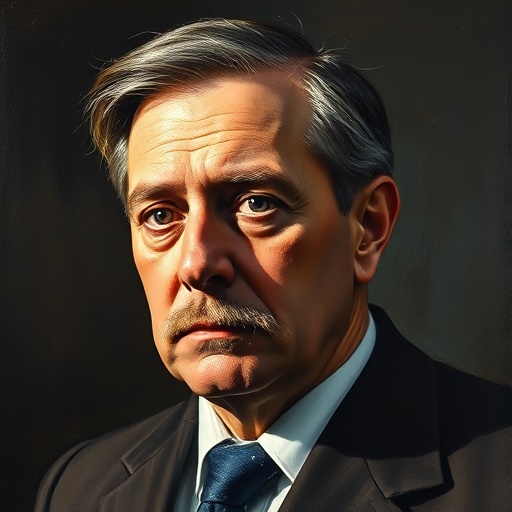
John von Neumann — "The world is not logical, it is psychological."
The world is not logical, it is psychological.
The world is not logical, it is psychological.
Click any product to generate a realistic preview. Up to 3 at a time.
* Initial load can take up to 90 seconds — revising the preview in another color is nearly instant.
"There's no sense in being precise when you don't even know what you're talking about."
"The world is not as simple as we would like it to be."
"The human brain is an amazing thing. It works from the day you're born until you fall in love."
"Mathematics is a game played according to certain simple rules with meaningless marks on paper."
"The more abstract a thing is, the more real it is."
Reported observation by an associate, highlighting his understanding of human behavior.
Date: 1940s-1950s
GeneralFound in 1 providers: grok
1 source checked
Despite our instinct to believe the world follows rational, predictable rules, what actually drives human behavior and outcomes is psychology — emotions, biases, fear, and perception. Logic describes how things should work in theory; psychology explains what people actually do. No matter how elegant or correct a logical framework is, humans consistently override it with irrationality, self-interest, and emotion. Understanding people means understanding minds, not equations.
Von Neumann's game theory was built on rational-actor assumptions, yet his work advising the U.S. military on nuclear strategy during the Cold War exposed how rarely leaders behaved rationally. He watched politicians and generals make decisions driven by fear, prestige, and ego rather than optimal logic. His immersion in both pure mathematics and real-world power politics gave him rare insight into the gap between theoretical rationality and actual human behavior.
Von Neumann's era — spanning two World Wars, the Manhattan Project, and the dawn of the Cold War — was defined by catastrophic failures of rational governance. Hitler's ideology, Stalin's paranoia, and nuclear brinkmanship showed that global events turned on psychology, not logic. The arms race was sustained by fear and prestige, not strategic necessity. Living through this collapse of Enlightenment rationalism, von Neumann saw firsthand that psychology, not reason, steered the world.
AI-generated insights based on extensive research and information for context. Factual errors? Email [email protected].
Your cart is empty