What it means
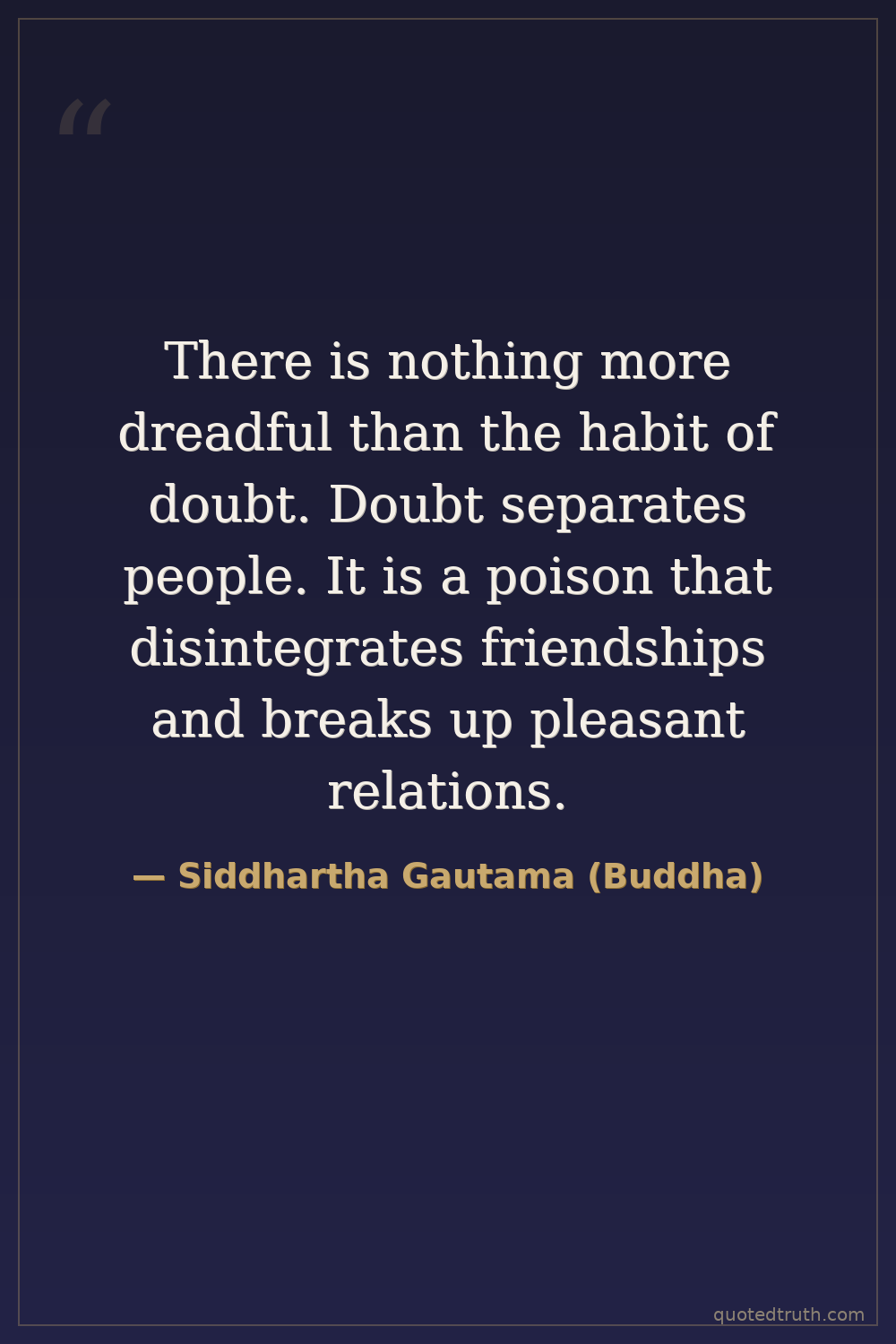
Chronic skepticism toward others corrodes human connection. When you constantly question motives, sincerity, or loyalty, you build walls that nobody can cross. Doubt acts like a slow-acting toxin: it eats away at trust, turns warm bonds cold, and dissolves friendships that once felt solid. The warning is not against careful thinking but against the reflexive suspicion that poisons every interaction and leaves a person isolated from those who once cared for them.
Relevance to Siddhartha Gautama (Buddha)
The Buddha built his teaching around clear seeing and mental purification, identifying vicikiccha (doubt) as one of the five hindrances blocking meditative progress and spiritual awakening. As a former prince turned wandering ascetic who gathered a sangha of monks, nuns, and lay followers, he knew communal harmony depended on mutual trust. His Eightfold Path emphasizes right intention and right speech, both impossible when corrosive suspicion governs the mind and fractures the community of practitioners.
The era
In 5th-century BCE northern India, the Buddha taught during a period of intense philosophical ferment called the Shramana movement, when wandering teachers, Jains, Ajivikas, and skeptics publicly debated rival doctrines about karma, rebirth, and liberation. Competing gurus openly questioned one another's claims, and lay supporters had to choose which teacher to feed and follow. In that marketplace of ideas, paralyzing doubt could wreck both monastic sanghas and the donor relationships that sustained them.
AI-generated insights based on extensive research and information for context. Factual errors? Email [email protected].